Explore E&I Aluminum's high-precision extruded profiles, designed for structural versatility, severe load-bearing, and modular compatibility.
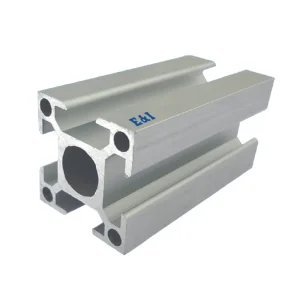
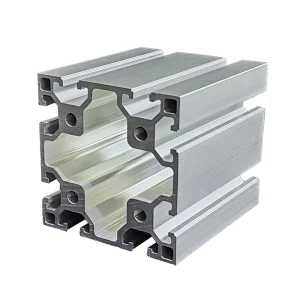
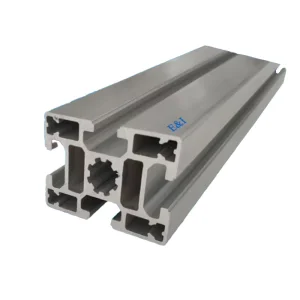
In modern industrial design, the choice of structural materials determines the physical limits of speed, efficiency, and longevity. Aluminium extrusion profiles have emerged as the foundational element of dynamic engineering. Combining the lightweight characteristics of elemental aluminium with engineered cross-sections, these profiles offer a strength-to-weight ratio that outperforms structural steel in modular configurations. Globally, the demand for high-strength, precision-extruded profiles is expanding, driven by the expansion of automated production systems, electric vehicle (EV) chassis architectures, aerospace structures, and photovoltaics.
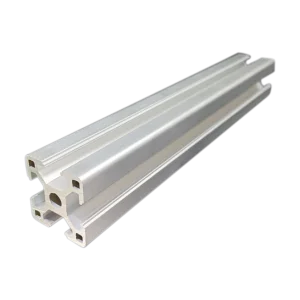
Selecting the correct aluminium alloy chemistry is a vital step in structural safety and component integration. The majority of structural profiles utilize 6000-series (Al-Mg-Si) and 7000-series (Al-Zn) formulations. Alloys like 6063-T5 and 6063-T6 provide excellent surface quality and anodizing properties, making them suitable for light-to-medium-duty automation components such as the *EI Small industrial aluminum profile ENI-10-3535*.
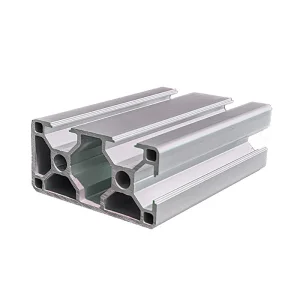
For more demanding dynamic stress environments, 6061-T6 and structural variations are preferred due to their higher tensile strength (minimum yield strength of 276 MPa vs. 170 MPa for 6063-T6). These alloys are critical for heavy-load structures like the *China Industrial Aluminum Profile ENI-8-30150A*, where deep resistance to torsional fatigue and mechanical failure is required.
| Alloy Grade | Yield Strength (MPa) | Tensile Strength (MPa) | Elongation (%) | Primary Industrial Application |
|---|---|---|---|---|
| 6063-T5 | 130 | 186 | 12 | Light Modular Framing, Electronic Enclosures |
| 6063-T6 | 170 | 215 | 10 | Medium Duty Automated Tracks, Assembly Lines |
| 6061-T6 | 276 | 310 | 12 | Heavy Load Support Frames, Precision Machined Brackets |
| 7075-T6 | 503 | 572 | 11 | Aerospace Structurals, High-Stress Robotic Kinematics |
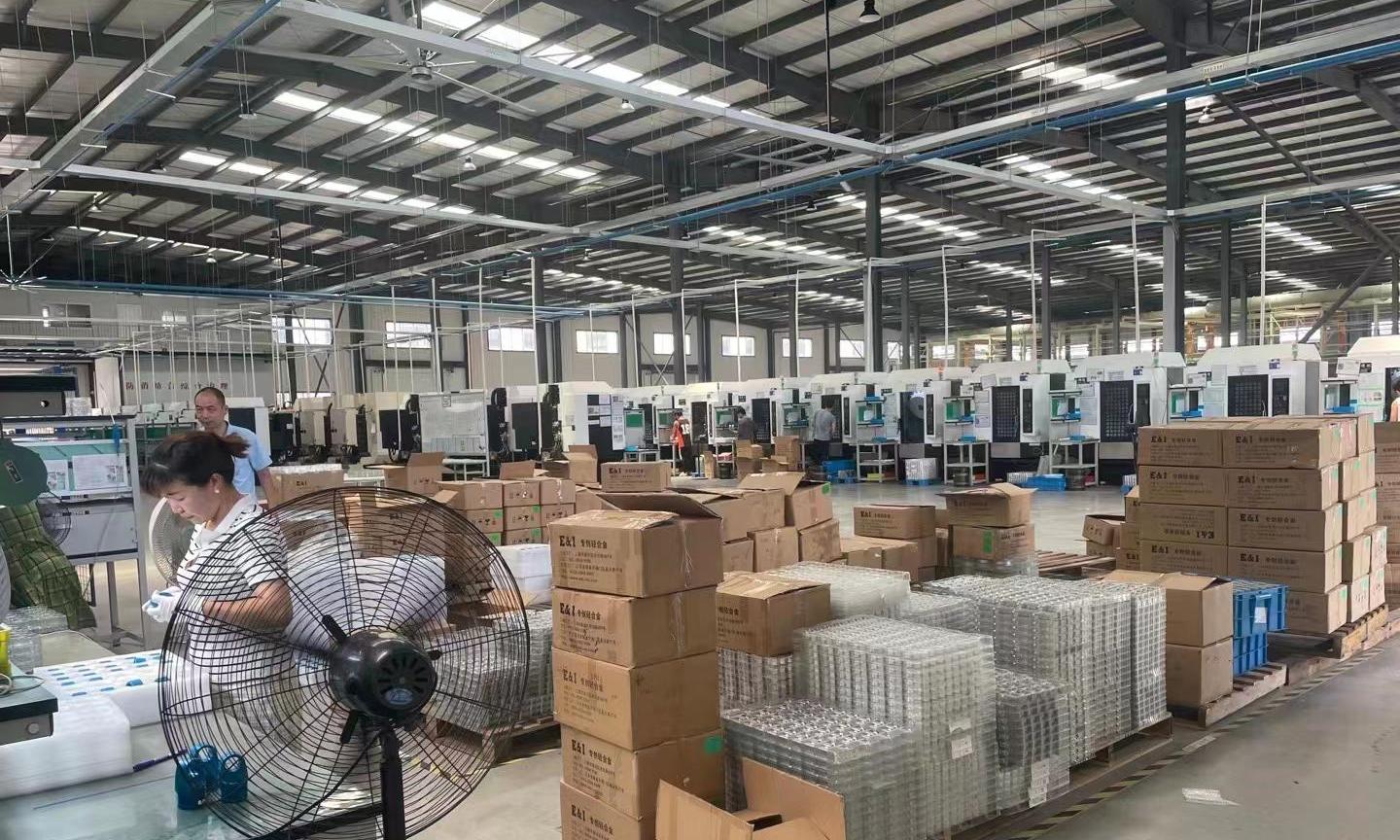
Guided by the core philosophy of "people-oriented, quality value, technological innovation, and win-win cooperation," Chengdu E&I Aluminum Industry Co., Ltd. is committed to the research, development, and manufacturing of high-difficulty, high-precision, and highly demanding aluminium alloy products.
Collaborating with the National Institute of Nonferrous Metals, the company utilizes a dedicated aluminium alloy technology research and development team, leading China's light alloy industry. E&I provides customers with comprehensive, professional structural solutions for aluminium alloy products, including profiles, castings, and forgings. Our advanced production and quality testing equipment guarantee consistent manufacturing parameters, creating value-for-money commercial outcomes for our customers and establishing E&I as a strategic industry partner.
Our client portfolio includes several Fortune 500 companies in the automotive, logistics, and aerospace sectors. E&I handles everything from raw die development and extrusion production to automated anodizing, surface spraying, and structural fabrication. We design and deliver custom systems, including profile structural frames, workspaces, cleanroom sheds, conveyor systems, and solar rack brackets.
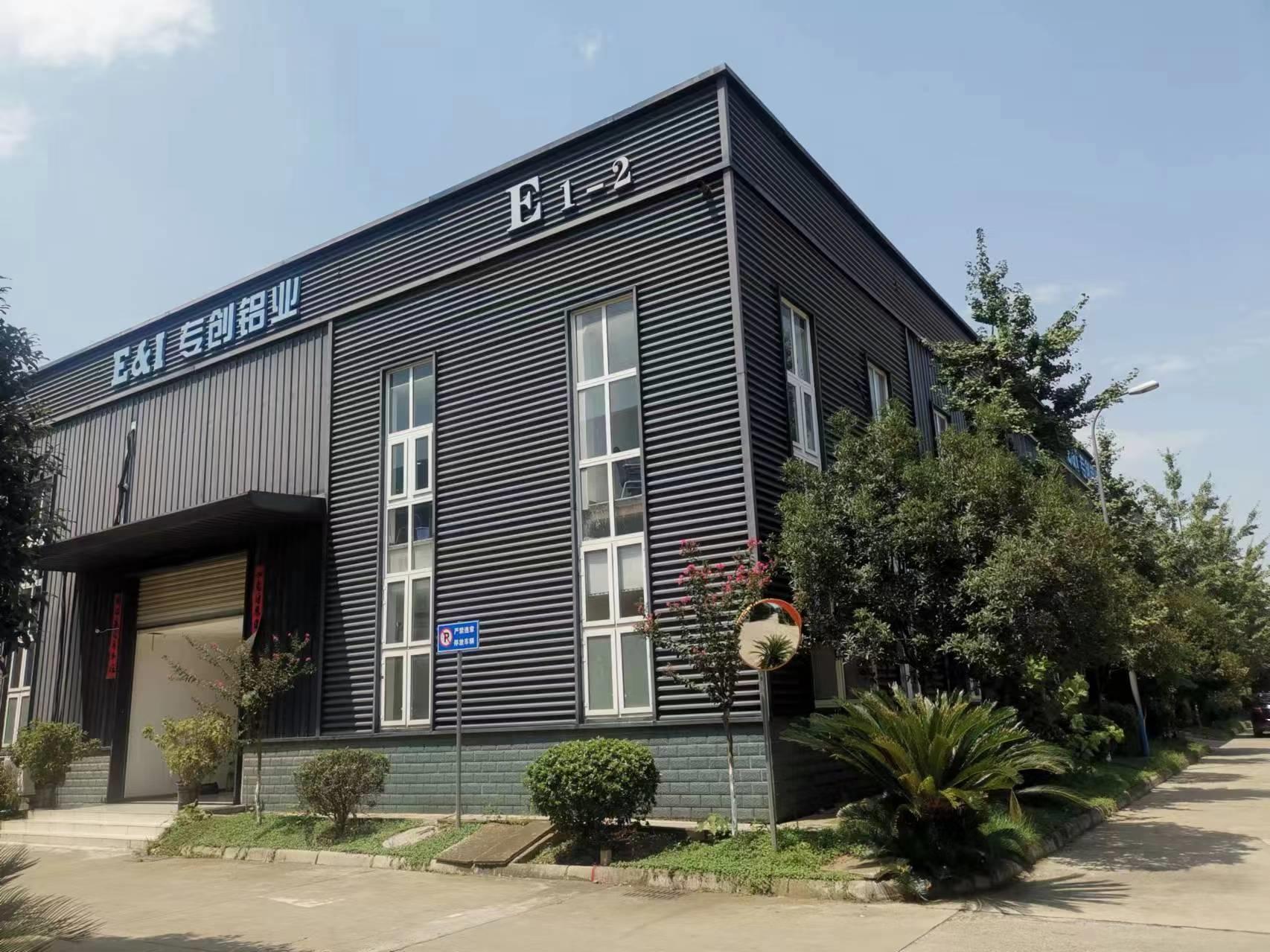
The manufacturing capabilities at E&I Aluminum are designed to produce structural components with high precision. Profiles are extruded to meet strict high-precision national standards, ensuring excellent surface finish, strong corrosion resistance, and consistent sizing. This focus on tolerance control simplifies the integration of fasteners and t-bolts, providing high connection strength and long-term vibration resistance.
By controlling the entire process from billet selection to surface treatments like anodizing and powder coating, E&I maintains high product reliability, serving as an efficient and trusted partner for industrial manufacturers globally.
E&I Aluminum operates under a set of values focused on consistent quality and ongoing innovation.
We value our workforce, providing development opportunities and competitive compensation to foster a shared path of growth.
We focus on supplying reliable products and support to create tangible, long-term value for our clients.
We continuously invest in R&D to optimize product characteristics, improve manufacturing methods, and maintain high standards.
We work closely with clients and supply chain partners to deliver shared benefits and support long-term collaborations.
In structural engineering, the geometric distribution of material across a profile's cross-section is critical to its mechanical performance. Under the Euler-Bernoulli beam theory, the deflection of a structural element is inversely proportional to its Moment of Inertia (I). Therefore, optimizing the shape of an extrusion profile is essential for achieving high bending and torsional resistance while minimizing weight.
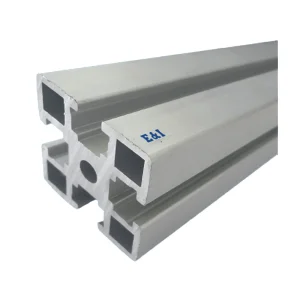
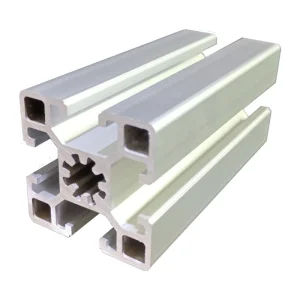
T-slot profiles are the standard in modular construction systems. The characteristic "T" groove allows users to install drop-in nuts, slot-blocks, and specialized fasteners without welding. This mechanical fastening method allows for easy adjustments on-site. Systems like the *EI T-slot aluminum profile E&I-10-4545* provide reliable joint strength and vibration resistance, making them ideal for heavy industrial machinery brackets and automation safety frames.
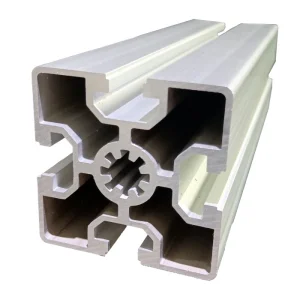
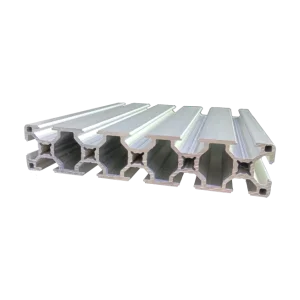
For applications experiencing high mechanical stresses, such as heavy-duty gantry systems or large material handling lines, standard modular profiles may not provide sufficient support. In these cases, engineers use multi-groove and wide-aspect profiles like the *China Industrial Aluminum Profile ENI-8-30150A* or the *Best ENI-8-8080F aluminum profile*. These profiles feature thickened outer walls and internal ribbing, which significantly increases the moment of inertia along the major axis to resist bending and deflection under load.
For safety guards, machine enclosures, and control cabinet supports, high load capacity is secondary to cost, material weight, and assembly speed. Lightweight profiles, such as the *EI Small industrial aluminum profile ENI-10-3535* or the *Best ENI-6-3030G Industrial Aluminum Profile*, feature optimized web thicknesses. This provides sufficient structural support for lighter components without adding unnecessary weight to the assembly.
The global aluminium extrusion sector is adapting to meet new environmental and technological demands, focusing on key shifts in production and materials:
Explore our second selection of industrial extrusion profiles, suitable for modular frame assemblies, home interiors, and automated systems.
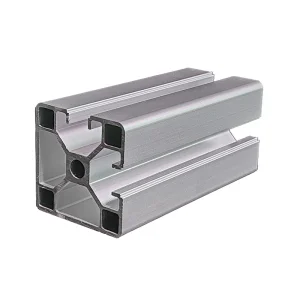
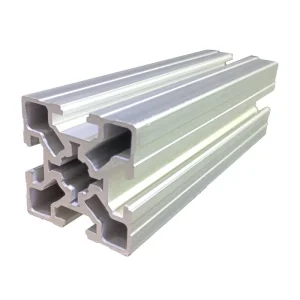
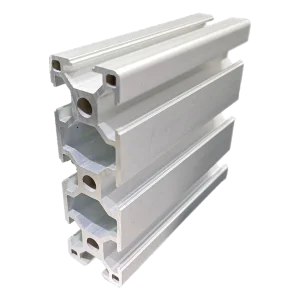
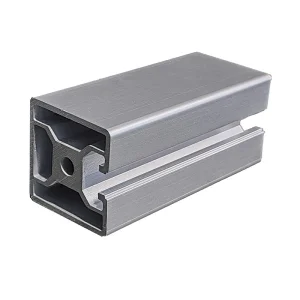
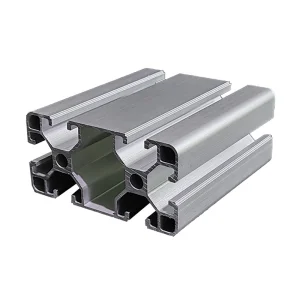
The demand for high-precision manufacturing is shaping the development of future profile designs. To support advanced production facilities, the industry is focusing on three key innovations:
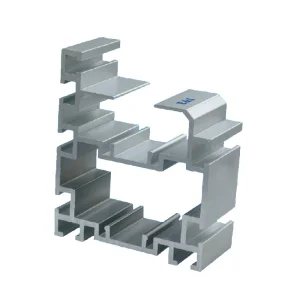
Standard industrial extrusions generally follow EN 755-9 tolerance standards, allowing variations between ±0.2mm to ±0.5mm depending on the profile's width. For high-precision automated assembly lines, tighter tolerances are required to ensure smooth alignment. E&I is refining its manufacturing parameters to support tolerances within ±0.05mm, helping reduce wear on belt drives and guide rails like the *high-quality 3 times chain aluminum profile*.
By adding small quantities of elements such as titanium, zirconium, or chromium to 6000-series alloys, manufacturers can improve grain structure during the cooling process. This micro-alloying technique helps prevent stress corrosion cracking (SCC) at critical connection points, improving the performance of profiles used in dynamic environments, such as solar arrays and robotic frames.
Anodized coatings do more than improve the appearance of the metal. Implementing Type III Hardcoat Anodizing creates an ultra-hard aluminium oxide surface layer exceeding 25 microns in thickness. This surface treatment is crucial for industrial automation, preventing scratching and surface degradation in harsh manufacturing environments.
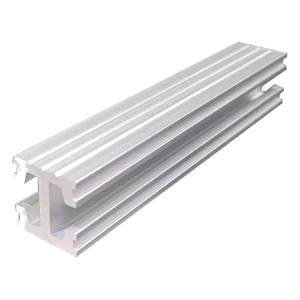
Custom extrusions like the *ENI-6-1818* are used as structural elements in automated conveyor lines, providing integrated tracks for belts and chain guides while simplifying sensor mounting.
Modular framing systems allow for rapid construction of robotic safety cages and workbenches. Transparent panels fit directly into profile slots, eliminating the need for complex mounting hardware.
Extruded frames support solar panel installations, offering long-term corrosion resistance and the structural strength to withstand wind loads while keeping system weight minimal.
Detailed engineering explanations to help you choose, design, and implement modular aluminium profiles.
The load-bearing capacity is determined using mechanical calculations for beam deflection under specific load conditions (point loads, uniform loads, or cantilever configurations). The key parameters are the material's Modulus of Elasticity (typically 69,000 MPa for aluminium) and the Moment of Inertia (I) of the profile's cross-section. Standard safety factors (often 1.5 to 2.0) are applied to ensure the stress remains within the alloy's yield strength limits.
Anodizing electrochemically converts the metal surface into a durable, corrosion-resistant oxide finish. This layer protects the profile from oxidation, prevents surface marking, and provides electrical insulation. In industrial settings, anodized finishes help maintain slide performance on guides and prevent dust accumulation.
T-slot profiles feature flat-walled slots designed for high-strength fastening and stationary joints. V-slot profiles incorporate angled slot edges, allowing dual-V wheels or linear bearings to roll smoothly along the profile length, serving as integrated linear guide tracks.
6063 is optimized for the extrusion process, allowing for complex shapes with thin walls. It responds well to heat treatment, offers good surface finishes, and is highly corrosion resistant, making it suitable for standard modular framing applications.
Yes, modular aluminium profiles can replace welded steel in many applications. They eliminate the need for welding, painting, and grinding, which reduces assembly time. Additionally, modular systems allow for adjustments and modifications on-site, whereas welded steel structures are permanent.