1. Executive Summary & Industry Paradigm Shift
In modern industrial design, automation architecture, and mechanical engineering, the selection of structural frames dictates the system's longevity, load capacity, and operational safety. Standard welded steel frames, which dominated the 20th century, are systematically being replaced by high-strength modular extruded aluminium profiles. As global manufacturing demands greater agility, companies like Chengdu E&I Aluminum Industry Co., Ltd. are driving this material paradigm shift.
Industrial structural design requires materials that balance structural strength, weight minimization, corrosion resistance, and flexible assembly. Anodized aluminium profiles with T-slot systems offer a compelling solution. Engineered from premium alloys such as the 6000-series (primarily 6063-T5, 6063-T6, and 6061-T6), these profiles are extruded to tight tolerances and anodized to defend against oxidative degradation in hostile industrial environments.
This whitepaper provides a comprehensive technical overview of the development, engineering requirements, and material properties of industrial profile aluminium products. It outlines the strategic sourcing advantages offered by Chengdu E&I Aluminum Industry Co., Ltd. and details how integrating high-precision modular extrusions optimizes productivity, reduces total cost of ownership (TCO), and ensures operational excellence.
2. Metallurgy, Mechanical Properties & Alloy Classifications
The performance of modular structural profiles is fundamentally defined by their alloy chemistry and heat-treatment (temper) state. The primary alloys utilized in industrial extrusion design belong to the Al-Mg-Si (6xxx series) family, known for exceptional extrudability, corrosion resistance, and responsiveness to structural heat treatment.
6063-T5 vs. 6061-T6: Structural Characteristics
6063-T5: Offers a smooth surface finish and complex cross-sectional geometry. It is suitable for medium-strength frame applications, guarding systems, workbenches, and enclosures. T5 cooling involves air quenching directly from the extrusion press followed by artificial aging.
6061-T6: Engineered for heavy structural components, load-bearing columns, and machinery frames requiring higher yield strength. T6 temper involves solution heat treatment, water quenching, and artificial aging, resulting in significantly higher tensile strength.
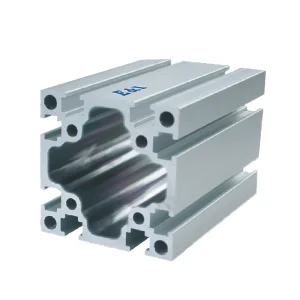
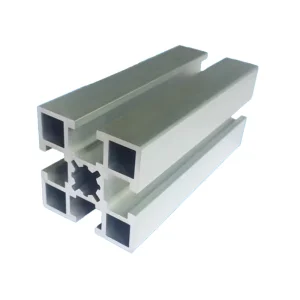
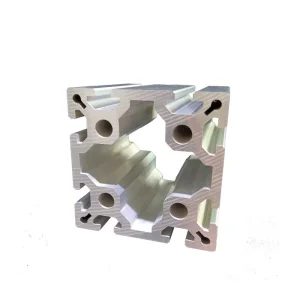
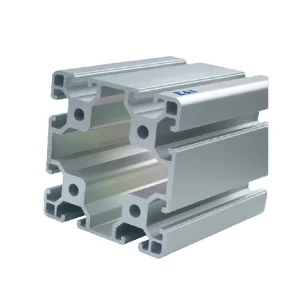
For applications such as load-bearing columns (e.g., the ENI-8-5050A series) or massive machine portals (e.g., the E&I-8-100100 profile), selecting the correct moment of inertia ($I_x$ and $I_y$) and section modulus ($W_x$ and $W_y$) is critical. The design must accommodate static structural loads, dynamic stresses from robotic motion, and torsional forces from off-center load distribution.
| Alloy & Temper | Tensile Strength (MPa) | Yield Strength (MPa) | Elongation (%) | Vickers Hardness (HV) | Primary Structural Application |
|---|---|---|---|---|---|
| 6063-T5 | ≥ 160 | ≥ 110 | ≥ 8 | ≥ 65 | Light frames, safety fences, display structures (e.g., ENI-6-2060) |
| 6063-T6 | ≥ 205 | ≥ 170 | ≥ 8 | ≥ 80 | Standard machine frames, linear actuators, conveyors (e.g., E&I-8-4040E) |
| 6061-T6 | ≥ 265 | ≥ 245 | ≥ 8 | ≥ 95 | Heavy-duty structural gantries, heavy load columns (e.g., E&I-8-100100) |
3. Structural Analysis of T-Slot and Modular Profiles
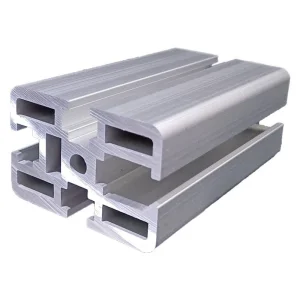
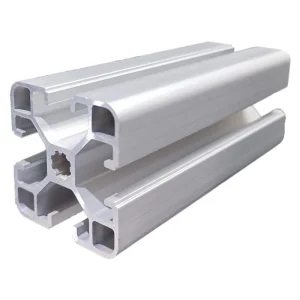
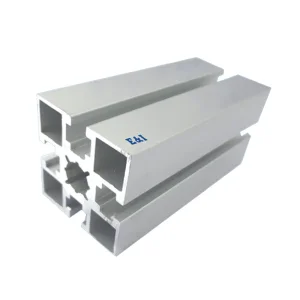
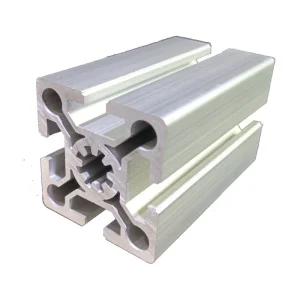
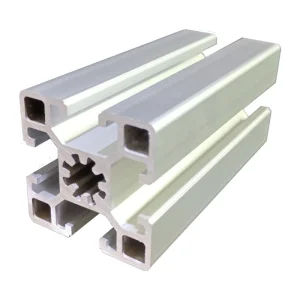
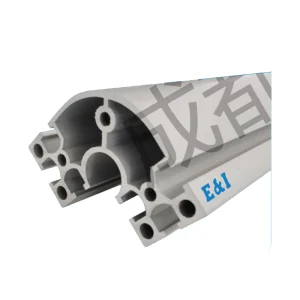
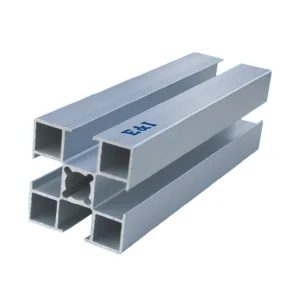
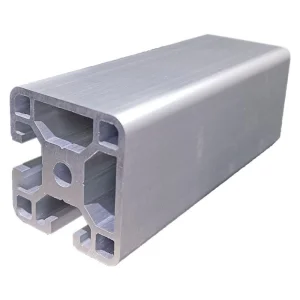
A key engineering advantage of modular aluminium extrusions is the integration of standardized T-slots. Standardized slot widths—typically 6mm, 8mm, and 10mm—enable secure connections without the heat deformation associated with structural welding.
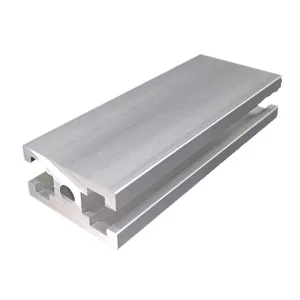
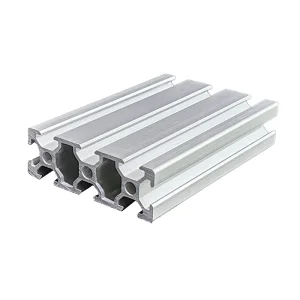
Slot 6 Series (e.g., ENI-6-2060, ENI-6-6630R)
Designed for light duty applications. With a 6mm slot width and M5 or M6 thread options, these profiles are ideal for safety guarding, desktop laboratory setups, cleanroom enclosures, and display modules where spatial footprint and weight optimization are critical.
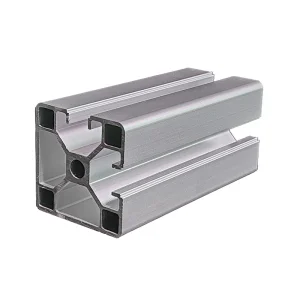
Slot 8 Series (e.g., ENI-8-4040A, E&I-8-5050L, ENI-8-8080)
The industry standard for mechanical automation, machine frames, cleanroom conveyor systems, and robot enclosures. Featuring an 8mm slot width and utilizing M8 fasteners, this series balances cost-efficiency, assembly speed, and structural integrity.
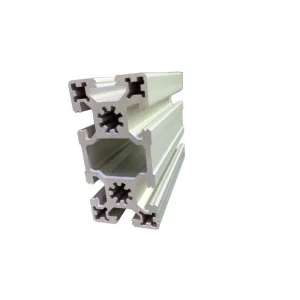
Slot 10 Series (e.g., E&I-10-4545, E&I-10-4590W)
Engineered for high load-bearing applications. These profiles use a 10mm slot width to handle high-tensile fasteners (M10/M12). They are typically deployed in heavy automation frames, large gantry supports, dynamic linear actuators, and heavy-duty structural columns.
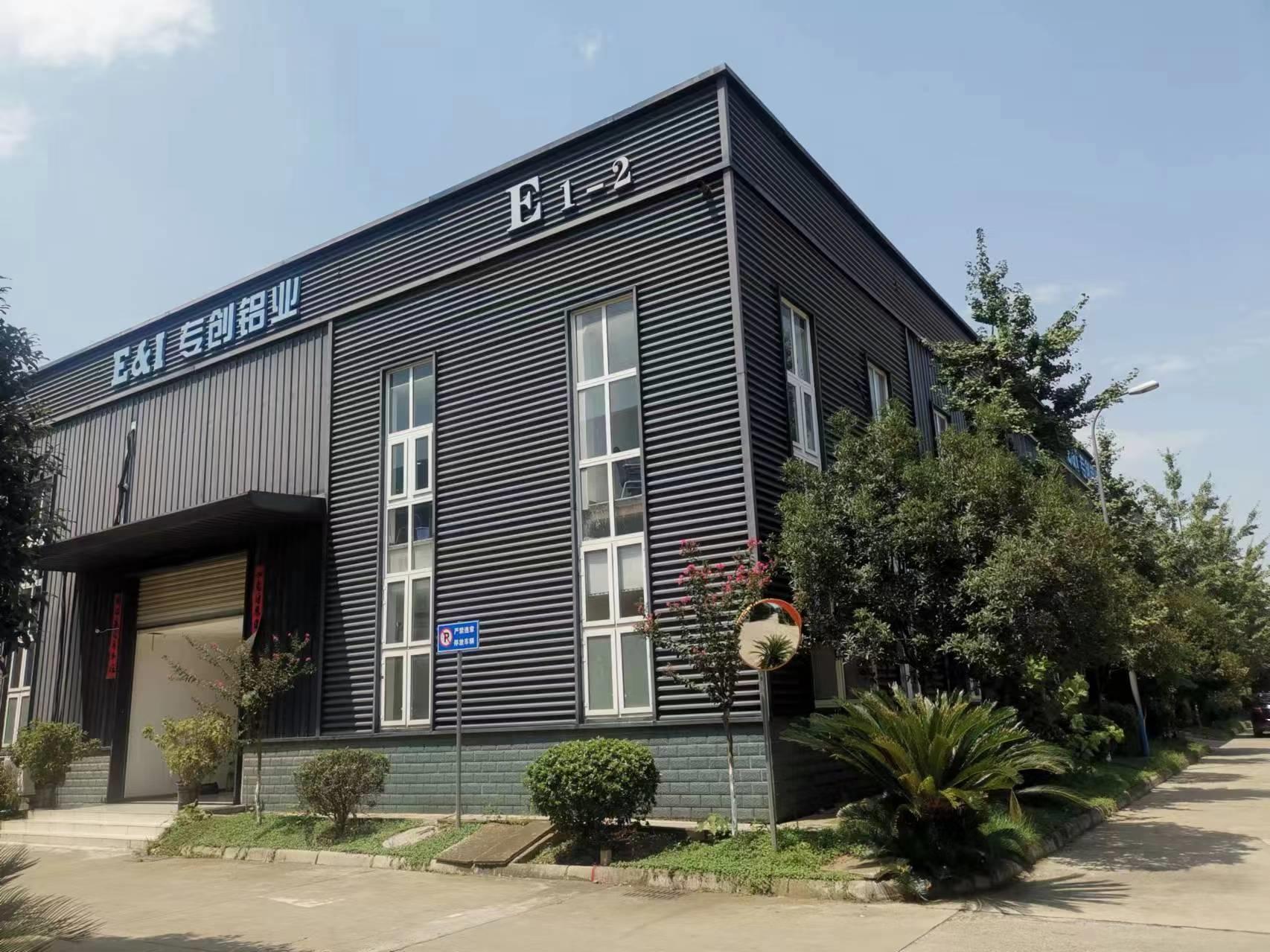
Figure 1: Chengdu E&I Aluminum High-Precision Production Facility and Advanced Extrusion Lines.
Anodization and Surface Protection Chemistry
Raw aluminium is susceptible to surface corrosion, particularly when exposed to acidic washdown chemicals, cutting fluids, or high humidity. Chengdu E&I Aluminum coats profiles using an advanced automatic anodizing line. The electrochemical process thickens the natural oxide layer, converting it into a hard, non-conductive, and highly wear-resistant aluminium oxide ($Al_2O_3$) barrier.
- Anodized Film Thickness: Standard indoor profiles receive an anodization coating of 10μm to 15μm. Heavy-duty outdoor or chemical-exposure profiles are treated up to 25μm+ to meet international Qualanod standards.
- Matt Finish and Corrosion Defense: A sandblasted chemical-matte treatment eliminates glare, improves aesthetics, and provides resistance to salt-fog environments, ensuring long-term operational integrity in cleanrooms and assembly lines.
4. China Factory 4.0: E&I's Supply Chain Resilience & Technical Capability
Chengdu E&I Aluminum Industry Co., Ltd. has integrated modern manufacturing principles (Factory 4.0) to deliver consistent quality and support agile supply chains. Working alongside the National Institute of Nonferrous Metals, the company utilizes simulation-based die design and automated temperature controls to refine its extrusion process.
Extrusion Accuracy and Straightness Tolerances
Standard architectural extrusions often permit twist and curvature tolerances that are unacceptable for industrial automation. Linear motion systems and high-speed robotic gantry frameworks require straightness profiles that minimize vibration and wear. Chengdu E&I profiles adhere to national high-precision grade tolerances, ensuring straightness deviation of less than 0.5 mm per meter, and flat surface twist limits within 0.25 mm.
Vertical Integration: Designing to Custom CNC Machining
E&I operates a complete production chain, including mold design, billet casting, extrusion, surface finishing, and secondary CNC machining. This vertical integration allows for precision operations such as counterboring, tapping, cross-milling, and miter-cutting to occur directly at the factory. Delivering pre-machined profiles reduces assembly times at client facilities, eliminates metal scrap management overhead, and ensures consistent quality control from raw billet to finished component.
5. Global Procurement Dynamics & Strategic Supply Chain Mitigation
Industrial procurement has shifted from a transaction-based model to a focus on total lifecycle value and supply chain resilience. Geopolitical factors, logistics volatility, and sustainability demands require component suppliers to act as active strategic partners.
Tackling Procurement Pain Points: E&I Logistics Strategies
- Price Stability: E&I manages raw material price volatility through forward hedging on the London Metal Exchange (LME) and Shanghai Futures Exchange (SHFE).
- Lead-Time Optimization: Located in Chengdu, a key logistics hub in Southwest China, the company provides diversified shipping routes, including ocean freight and direct China-Europe rail links, ensuring delivery in 18 to 25 days.
- Quality Audits & Traceability: Every production run includes mill test reports (MTRs) indicating chemical composition and mechanical properties, ensuring complete material traceability.
6. In-Depth Case Study & Localized Application Engineering
The applications for E&I modular aluminium profiles span multiple high-tech manufacturing sectors:
A. High-Speed Robotic Pick-and-Place Gantry Systems
For high-frequency delta and Cartesian robotic handling systems, low frame mass is critical to minimize inertia and optimize cycle times. By replacing structural structural steel with profiles such as the E&I-10-4590W and ENI-8-8080, structural weight is reduced by up to 55% while maintaining the necessary rigidity. This reduction in mass allows for faster acceleration and deceleration, leading to a direct increase in throughput.
B. ISO Class 5 Cleanroom Enclosures and ESD Conveyors
Semiconductor manufacturing and pharmaceutical packaging demand dust-free environments. The smooth, anodized finish of the E&I-8-4040E profile does not shed particulate matter and is easy to clean. Combined with ESD-safe profile connector tabs and conductive grounding strips, these frames dissipate electrostatic charges, protecting sensitive electronic components during handling.
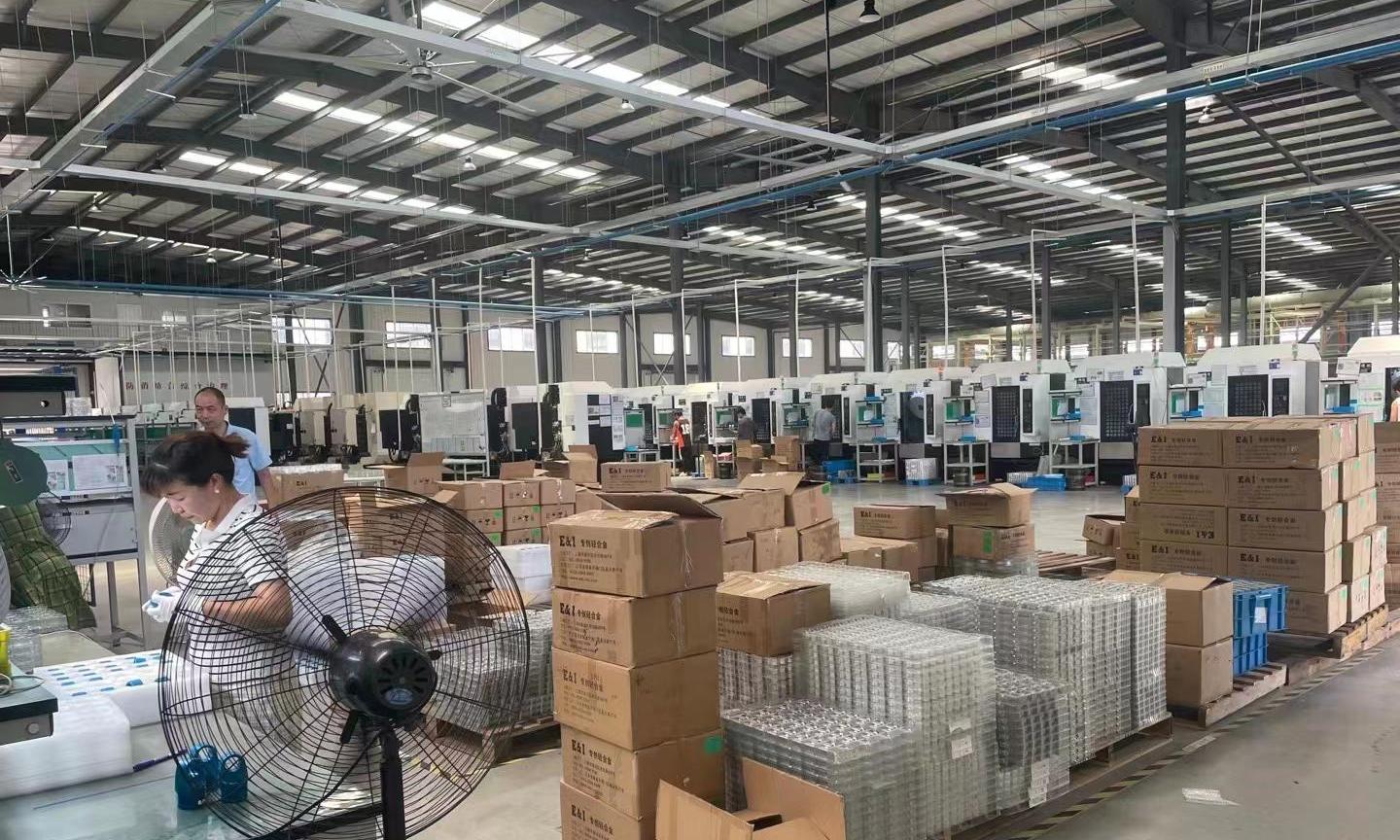
Figure 2: Custom modular workstation frameworks built using E&I Slot 8 (4040) profile extrusions.
7. Enterprise Strategy, Core Values & Strategic Partnership
Chengdu E&I Aluminum Industry Co., Ltd. operates under a collaborative business model designed to align technical capability with customer needs.
People-oriented
We treat our engineering staff as our primary asset, supporting professional development and maintaining safe manufacturing environments.
Quality Value
Our quality assurance systems track every extrusion run, ensuring dimensional tolerances and surface finishes meet client specifications.
Technological Innovation
In partnership with the National Institute of Nonferrous Metals, we invest in alloy development and process optimization.
Win-win Cooperation
We work as a strategic technical partner, offering custom solutions from initial design through to final logistics support.