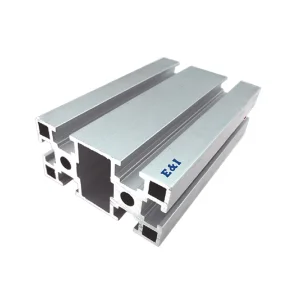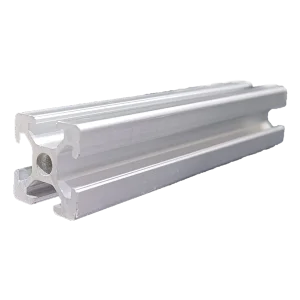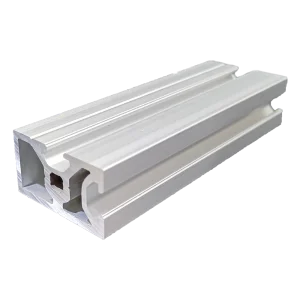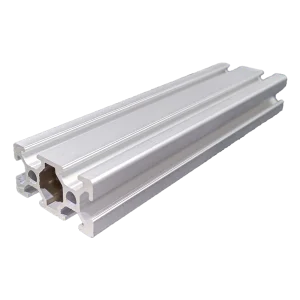
Nagoya, situated in the Chubu region of Japan, serves as the engine room of the country's manufacturing superpower status. As the capital of Aichi Prefecture, the Nagoya metropolitan area boasts the highest output of industrial shipments in Japan, dominating key industries such as automotive assembly, aerospace technology, mechanical robotics, and machine tools. In this dense ecosystem of advanced manufacturing, the demands placed on engineering components are exceptionally strict. Modular flexibility, high rigidity, low weight, and absolute dimensional precision are non-negotiable.
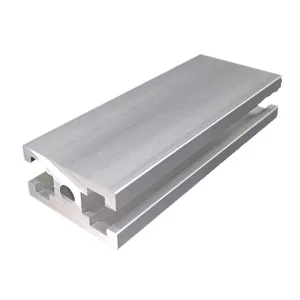
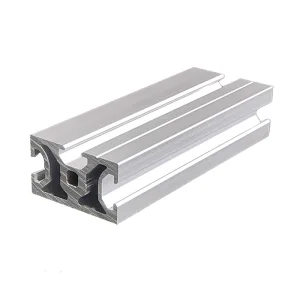
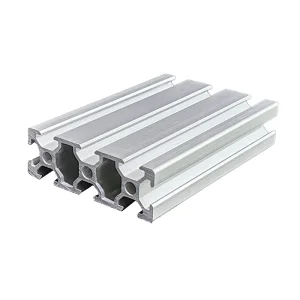
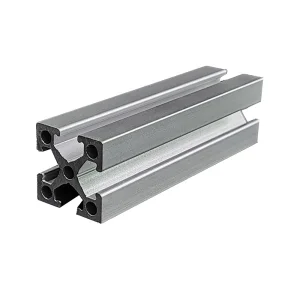
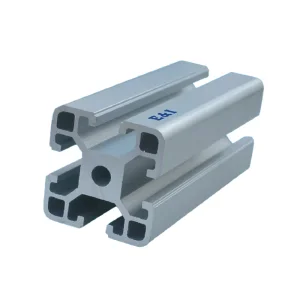
The 20 series aluminum profile, possessing a base cross-section of 20mm, has evolved to become the industry standard for micro-to-medium structural frameworks across Nagoya’s automated lines. Because of its localized center spacing and compact 6mm or 8mm slot sizes, it represents the sweet spot for constructing electronic test benches, laboratory cleanrooms, optical display frames, light-load conveyors, and safety guarding. Its modular nature integrates smoothly with Japanese lean manufacturing systems, facilitating rapid configuration changes directly on the production floor without welding or heavy drilling.
On a global scale, the transition from heavy steel framing to aluminum alloy structures continues to accelerate. Chengdu E&I Aluminum Industry Co., Ltd. leads this transition by deploying state-of-the-art extrusion technologies. Aluminum alloy 6063-T5 represents the optimal combination of formability, mechanical strength, corrosion resistance, and heat treatability.
The mechanical characteristics of the 20 series are engineered to meet both the ISO 9001 quality guidelines and the rigorous Japanese Industrial Standards (JIS). The material offers a tensile strength of no less than 190 MPa, a yield strength exceeding 150 MPa, and an elasticity modulus of 68.9 GPa. This structural strength allows engineers in robotics and semiconductor processing to utilize complex spatial layouts with minimal cross-sectional footprint.
| Profile Specification | Material Class | Slot Width | Tensile Strength (Min) | Anodizing Film Thickness | Typical Applications |
|---|---|---|---|---|---|
| ENI-6-2020 | 6063-T5 / T6 | 6 mm | 190 MPa | ≥ 10 μm | Lightweight display racks, 3D printers, sensor brackets |
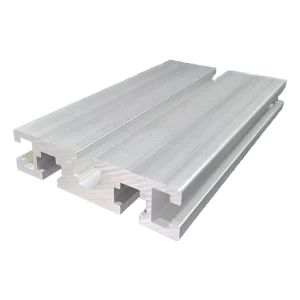
| ENI-6-2040 | 6063-T5 | 6 mm | 195 MPa | ≥ 10 μm | Automated conveyor frames, protection guard panels |
| ENI-8-2040A | 6063-T5 | 8 mm | 195 MPa | ≥ 12 μm | Automotive instrument frames, machine housing panels |
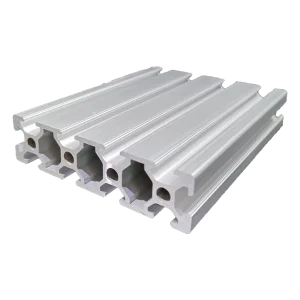
| ENI-6-2080 | 6063-T5 / T6 | 6 mm | 200 MPa | ≥ 12 μm | Heavy automation tables, cleanroom partitions, linear guides |
The deployment of 20 series profiles within Nagoya’s core automotive and aerospace facilities can be categorized into four specific application vectors:
Automated Guided Vehicles (AGVs) and Autonomous Mobile Robots (AMRs) are ubiquitous on Nagoya's assembly floors. The 2020 and 2040 anodized lightweight frameworks are used to engineer top modules, shelves, and mechanical sensor mounts on top of mobile bases. The high strength-to-weight ratio of 6063-T5 aluminum ensures the vehicles consume less power during acceleration, maximizing operational battery cycles.
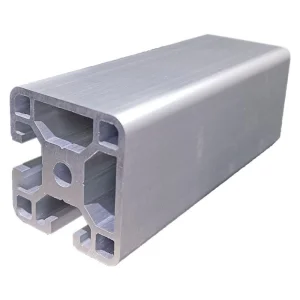
Utilizing custom models such as the one-side-sealed ENI-6-2035EE, design teams assemble modern, highly efficient workbenches for quality inspection tasks. The smooth, flat outer wall offers safety to assembly personnel, while the inner structural slots retain full compatibility with modular pneumatic lines, pick-to-light sensor mount brackets, and computer monitor arms.
With high-tech electronic manufacturing rising alongside heavy automation in Nagoya, cleanrooms and specialized enclosure panels have become critical. Product categories such as the ENI-6-2040 and ENI-8-2040A are configured with acrylic or polycarbonate inserts to create modular clean booths, laser safety cabins, and visual inspection enclosures.
The ENI-6-2080 and ENI-8-2080G multi-slot layouts serve as structural columns and mechanical crossbars for heavy overhead display components, coordinate gantries, and Cartesian robotic setups.
Chengdu E&I Aluminum Industry Co., Ltd., in line with the business philosophy of "people-oriented, quality value, technological innovation, and win-win cooperation", is dedicated to the research and development and manufacturing of aluminum alloy products with high difficulty, high precision and high requirements.
The company relies on the National Institute of Nonferrous Metals, drawing support from a professional aluminum alloy technology research and development team in China's light alloy industry. Through this collaboration, we provide customers with overall solutions for aluminum alloy products such as profiles, castings, and forgings. Our advanced production and testing equipment guarantee product quality, while our excellent professional services create commercial value for customers, making us a strong strategic partner in aluminum alloy products and services. The main customers include global leaders such as major automobile companies and airlines, resulting in wide praise across international industrial sectors for many years.
Strive to become one of the top three companies in China's aluminum alloy industry in terms of product competitiveness, innovation ability and technical strength, provide customers with products and services of superior value, and enable the company's shareholders, employees, customers, partners and society to benefit more from it, achieving mutual progress and common development.
As industrial platforms migrate toward the concept of Smart Factories, structural components must evolve. Chengdu E&I Aluminum Industry Co., Ltd. is actively exploring a development roadmap focused on integrating physical profiles with industrial IoT systems. Future profiles are expected to host sensor pathways directly inside their hollow cores, facilitating smart structural deflection reporting and vibration analysis in real-time.
Additionally, global green policies demand strict lifecycle footprints. Industrial aluminum extrusions are inherently sustainable, offering a highly circular path back to smelting with minimal energy loss. By deploying low-carbon processing lines and automated anodizing operations, we ensure that our supplies comply with clean import demands in Japan, North America, and the European Union.
All standard E&I 20 series aluminum extrusions are manufactured using premium 6063-T5 or 6063-T6 aluminum alloys. This composition provides excellent tensile properties, surface quality, and anodizing adaptability.
Yes, our industrial profiles are manufactured according to standard international tolerances. The ENI-6 and ENI-8 classifications correspond to 6mm and 8mm slot widths respectively, meaning they are compatible with standard modular nuts, bolts, brackets, and slider blocks used in Nagoya's automated manufacturing sectors.
Our standard anodizing process yields a film thickness of ≥ 10 μm (up to 15 μm upon custom order request). This anodized layer protects the structural aluminum against rust, minor impacts, and aggressive cleaners used in cleanrooms.
Absolutely. We offer complete custom services including precise CNC cutting, milling, tapping, counter-boring, and custom structural assemblies according to customer-supplied CAD drawings.
We manage bulk industrial shipping securely packed in standard export wooden crates. Thanks to our proximity to transport networks, we offer direct shipping lines to Port of Nagoya, ensuring competitive transit timelines and seamless import clearance support.