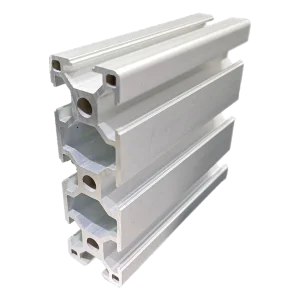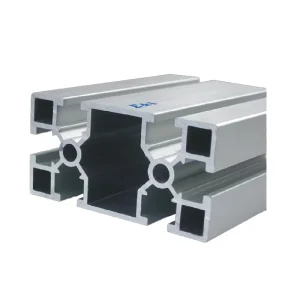
Explore our premium, heavy-duty industrial framing solutions, designed for seamless structural floor anchoring, machinery guardrails, and heavy framework integrations.
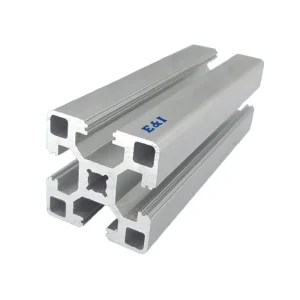
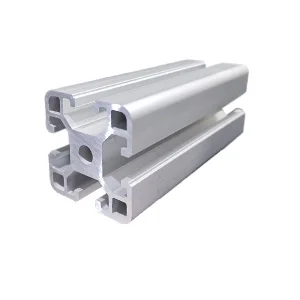
In modern smart manufacturing plants, distribution hubs, and processing facilities, the structural connection between static floor surfaces and dynamic mechanical setups is a core point of failure or success. Floor fixings, mounting bases, and high-strength floor-anchoring T-slot profiles serve as the foundation of modern shop floor integrity. Chengdu E&I Aluminum Industry Co., Ltd. is positioned at the intersection of structural engineering and metallurgical precision, delivering high-tolerance structural profiles and mounting systems designed to handle severe dynamic vibrations, heavy structural payloads, and stringent sanitary requirements.
Moving beyond traditional, labor-intensive welded steel floor mounts, the industry is transitioning toward modular aluminum framing assemblies. This technical whitepaper explores how high-tensile architectural and structural aluminum extrusions provide critical load paths, anchoring versatility, and corrosion-resistant profiles that meet standard-setting requirements across automotive production, aerospace tooling, and heavy automation environments.
Chengdu E&I Aluminum Industry Co., Ltd., in line with the business philosophy of "people-oriented, quality value, technological innovation, and win-win cooperation", is dedicated to the research and development and manufacturing of aluminum alloy products with high difficulty, high precision, and high requirements.
The company relies on The National Institute of Nonferrous Metals, drawing from a professional aluminum alloy technology research and development team in China's light alloy industry. This technical foundation allows us to provide customers with overall solutions for aluminum alloy products such as profiles, castings, and forgings. Production and testing equipment guarantee product quality, and excellent professional services create value-for-money commercial value for customers, making us a strategic partner in aluminum alloy products and services. The main customers include the world's top 500 companies such as automobile companies and airlines, and have been widely praised by customers for many years.
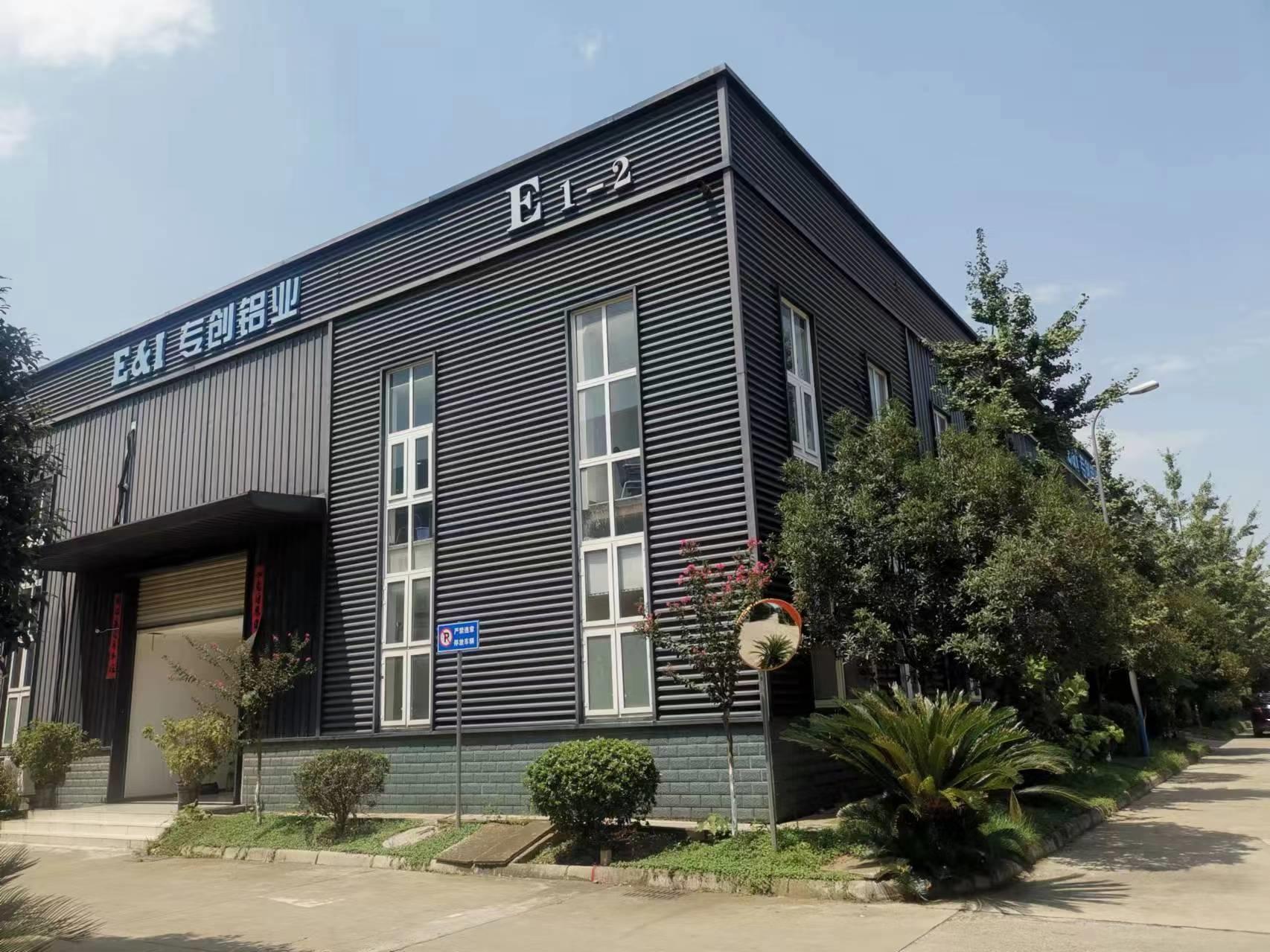
Based on the business philosophy of people-oriented, quality value, technological innovation, and win-win cooperation, the company operates a robust factory footprint featuring comprehensive design, aluminum profile extrusion production capacity, and automated anodizing and spraying lines. We provide various aluminum profile structural frames, workbenches, mechanical fences, solar supports, assembly lines, storage equipment, automation components, clean sheds, and related design and installation one-stop services.
The aluminum profiles provided by Chengdu E&I Aluminum Industry Co., Ltd. are produced according to national high-precision requirements. They feature an clean appearance, high finish, and strong corrosion and oxidation resistance. The integrated aluminum profile accessories are easy to install, featuring anti-loosening and shock resistance properties, high connection strength, and highly adaptable structural performance.
Driving innovation and sustainable growth across global manufacturing and supply chains.
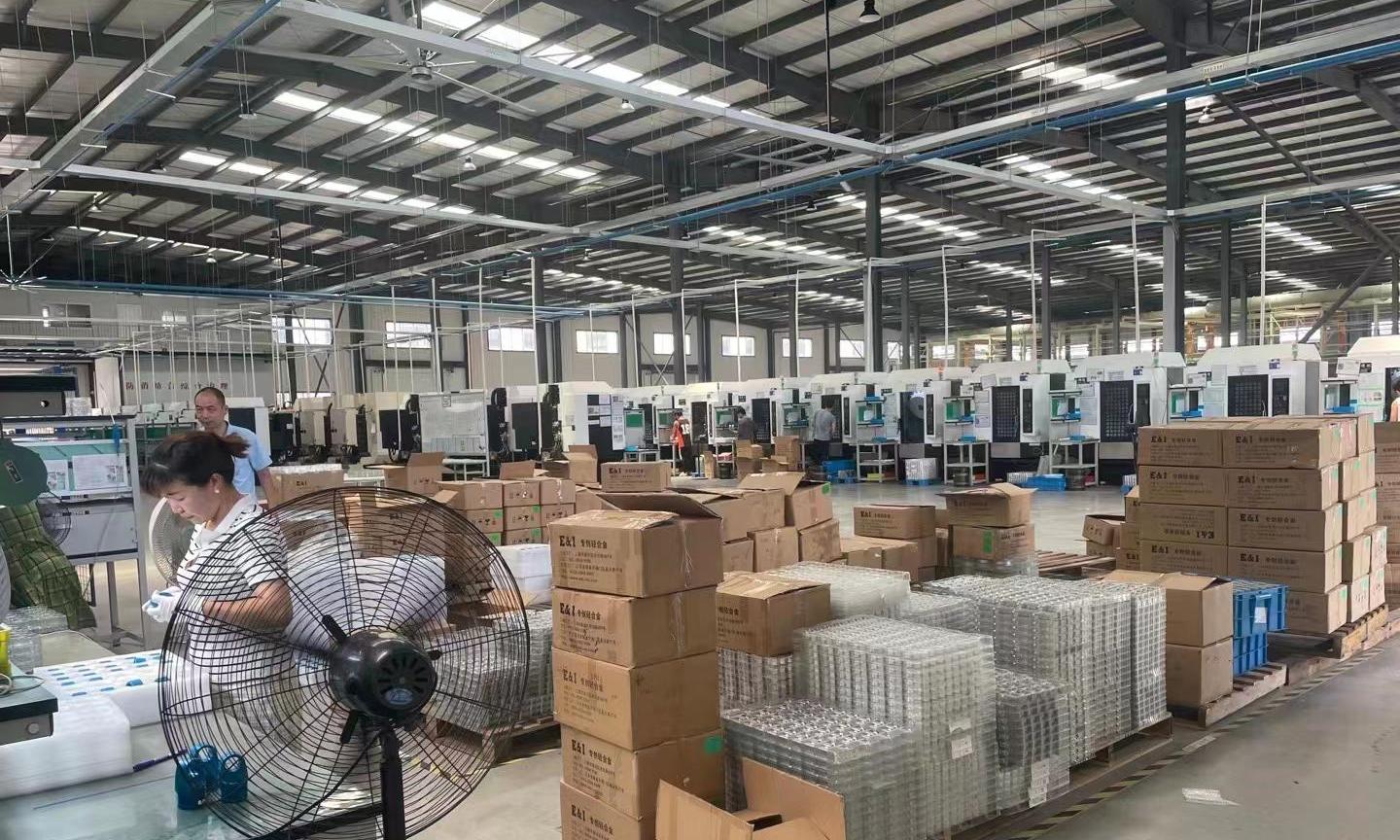
We strive to become one of the top three companies in China's aluminum alloy industry in terms of product competitiveness, innovation ability, and technical strength. Our goal is to provide customers with products and services of superior value, enabling the company's shareholders, employees, customers, partners, and society to benefit from shared gains and collaborative development.
The company regards employees as our greatest wealth. We seek to understand their pursuits, provide them with room for professional development, offer competitive salaries, and grow together.
We deliver durable products and optimized services, providing long-term reliability and creating tangible value for our industrial clients.
Continuous R&D investments allow us to maintain a leading position in the industry. Innovation in products, manufacturing technology, and logistics structures is key to building core, long-term competitiveness.
We collaborate closely with clients, employees, shareholders, and supply-chain partners to design robust business ecosystems and establish long-term industrial relationships.
The technology behind floor fixings and industrial bases has changed significantly over the last two decades. Historically, structural supports for automated assembly lines, robotic enclosures, and storage units were welded directly to structural steel and anchored deep into factory concrete. While this provided high rigidity, it limited adaptability, required hot-work permits, and made modifications expensive.
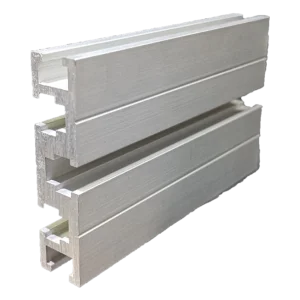
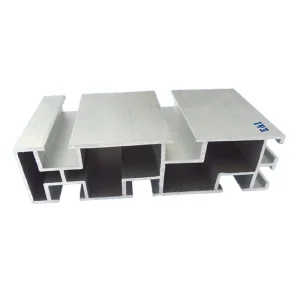
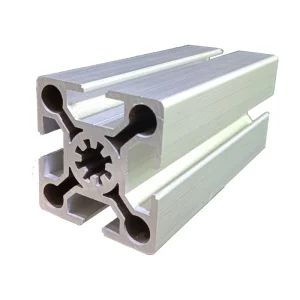
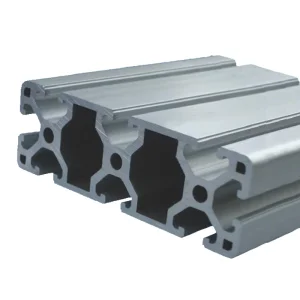
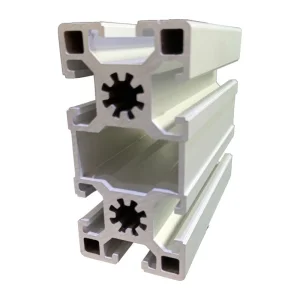
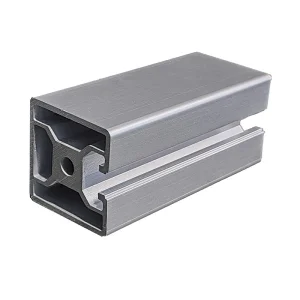
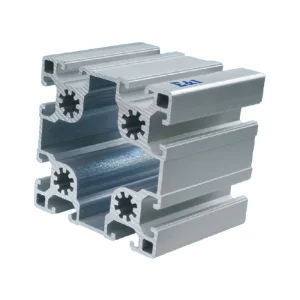
Modern manufacturing facilities require high adaptability. Modular aluminum profiles with specialized floor mounting plates have replaced many welded alternatives. High-strength extrusions (such as the ENI-10-9090 and E&I-8-5050W) act as structural pillars, anchored to concrete bases using vibration-dampening floor brackets. These assemblies balance rigidity with structural flexibility, allowing lines to be reconfigured without structural demolition.
Several structural engineering factors are driving the adoption of high-performance floor fixings and modular profiles:
Global supply chains demand components that meet international engineering standards. Procurement teams must source products that satisfy both EU machinery directives and US OSHA guidelines for worker safety. Floor-anchored safety fences and modular partitions (such as those constructed using ENI-8-3838B) must withstand specified impacts without failure.
Chengdu E&I Aluminum addresses these requirements by enforcing tight tolerances on profile straightness, slot dimensions, and anodic film thickness. This ensures that brackets, floor fixings, and anchoring accessories fit reliably on site, reducing assembly issues and installation delays during international plant rollouts.
To maintain a reliable supply of structural components, manufacturers must look beyond basic extrusion processes. Chengdu E&I Aluminum utilizes advanced manufacturing workflows to ensure high-capacity output, dimensional consistency, and supply chain reliability. By integrating our R&D processes with research from the National Institute of Nonferrous Metals, we optimize alloy composition for specific mechanical challenges.
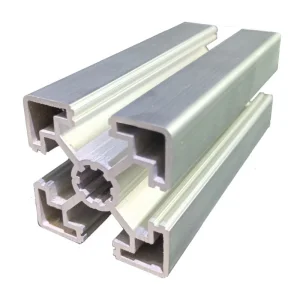
Our manufacturing facility features automated extrusion presses, precision cutting lines, multi-axis CNC machining, and automated anodizing systems. This integration minimizes production variance, meaning a batch of ENI-8-4040B profiles produced today will match the dimensions and finish of a batch extruded months later.
Our automated anodizing process deposits a uniform oxide layer, protecting aluminum profiles against harsh chemical cleaners, high humidity, and physical wear. T-slot dimensions are held to tight tolerances to ensure standard metric fasteners fit smoothly, avoiding the alignment issues often found in non-precision extrusions.
With international freight costs and project timelines under pressure, structural components must arrive ready for assembly. We provide pre-cut, pre-drilled, and pre-packaged kits, including all required floor-anchoring base plates, fasteners, and brackets. This direct-to-site supply model helps international engineering firms reduce assembly time and labor requirements during installation.
Choosing the right profile and floor mounting setup depends on the specific demands of your operating environment. Below are four common industrial applications:
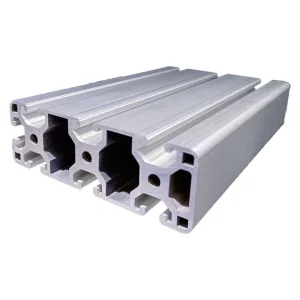
Heavy automation systems require strong structural frames capable of handling continuous load shifts. For these setups, we recommend large-section profiles like the ENI-10-9090 and ENI-8-40120. These profiles are secured to the floor using heavy-cast iron or thick steel base plates. The 10mm slot width accommodates large M10 structural bolts, ensuring high shear resistance under continuous operation.
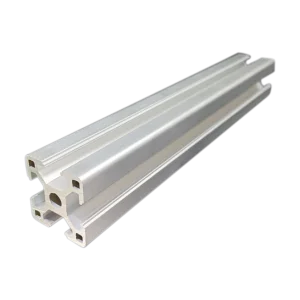
Robotic arms generate significant moment forces at the base during high-speed movements. Automated areas must be enclosed with safety guarding that meets impact standards. Profiles such as the ENI-8-3838B and ENI-8-3030 are designed for this purpose, providing lightweight structures that can be anchored with dynamic base plates to absorb vibration and withstand accidental impacts.
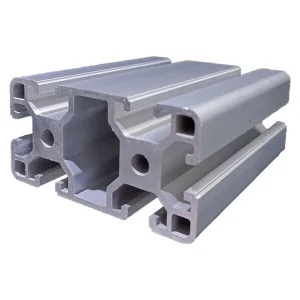
Modern distribution hubs require robust, space-efficient storage systems that can support high payloads. Using profiles like the ENI-8-40120E and ENI-8-4080G, engineering teams build modular racking structures that integrate directly with floor anchoring. These systems resist vertical loading and dynamic forces from forklifts and automated storage retrieval systems (ASRS).
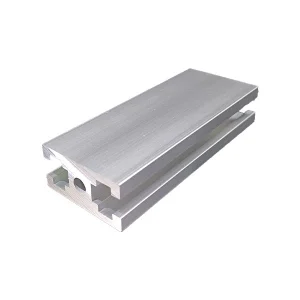
Semiconductor and pharmaceutical production require cleanrooms free from particulate contamination. Modular cleanroom cabins utilize profiles with smooth, anodized finishes like the ENI-6-1560 and ENI-8-3090. These profiles feature rounded external corners and covered slots to prevent dust buildup, and are anchored to cleanroom floor grids using low-outgassing base fixings.
To help you select the appropriate components for your framing and mounting needs, this table compares key mechanical properties across our core profile range:
| Profile Code | Dimensions (mm) | Slot Width | Weight (kg/m) | Moment of Inertia (Ix) | Recommended Floor Fixing |
|---|---|---|---|---|---|
| ENI-10-9090 | 90 x 90 | 10 mm | ~7.2 | ~185.4 cm⁴ | Heavy-Duty Cast Steel Foot Plate (M16 Anchor) |
| E&I-10-4590 | 45 x 90 | 10 mm | ~4.1 | ~95.2 cm⁴ | Dual Anchor Extruded Aluminum Base |
| ENI-8-4080 | 40 x 80 | 8 mm | ~3.2 | ~68.1 cm⁴ | Standard Anchor Foot (M12 Anchor) |
| ENI-8-4040B | 40 x 40 | 8 mm | ~1.8 | ~18.5 cm⁴ | Single Anchor Gusset Corner Base Plate |
| ENI-6-1560 | 15 x 60 | 6 mm | ~1.2 | ~8.9 cm⁴ | Direct Mounting Plate (Low Profile) |
Discover our heavy-duty profiles, architectural frames, and custom-length assemblies, designed for high load capacity and straightforward installation.