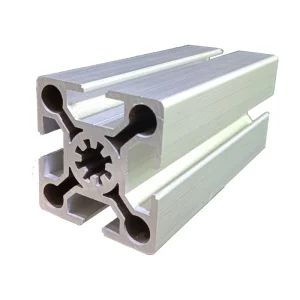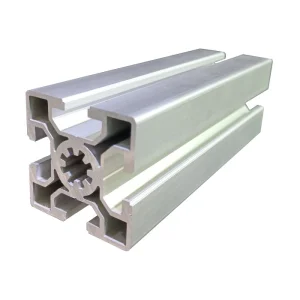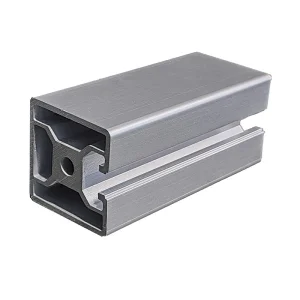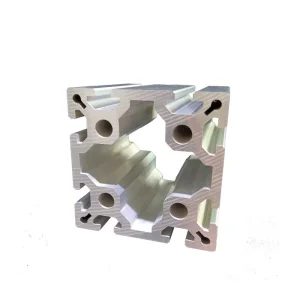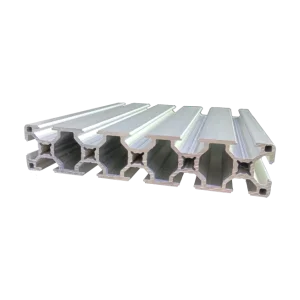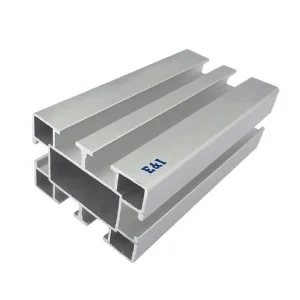
Explore the foundational components of E&I's high-rigidity structural rectangular profiles, meticulously optimized for precision framing and automated machinery assemblies.
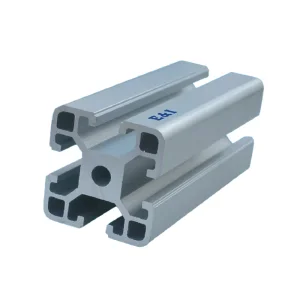
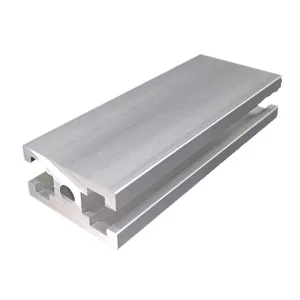
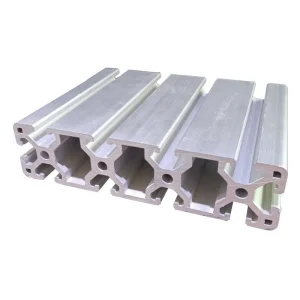
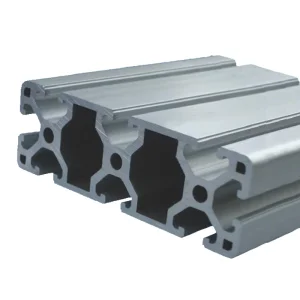
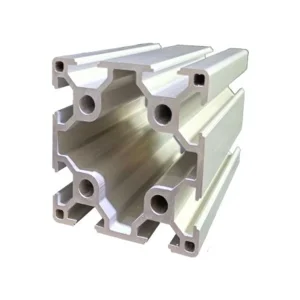
Guided by our foundational business philosophy—"people-oriented, quality value, technological innovation, and win-win cooperation"—Chengdu E&I Aluminum Industry Co., Ltd. is a premier high-tech enterprise dedicated to the research, development, extrusion, and precision manufacturing of aluminum alloy products designed to meet high difficulty, high precision, and rigorous industrial requirements.
Our key technological edge is rooted in our collaboration with The National Institute of Nonferrous Metals, one of China's most respected scientific research hubs in light alloy metallurgy. This partnership has allowed our professional aluminum alloy technology R&D team to consistently deliver holistic, high-performance solution pathways across profiles, castings, and forgings, ensuring that we stand as an authoritative resource in global structural materials engineering.
"We provide comprehensive structural solutions to the world's most demanding enterprises, including Fortune 500 automotive manufacturers, advanced logistics pioneers, and global aviation brands."
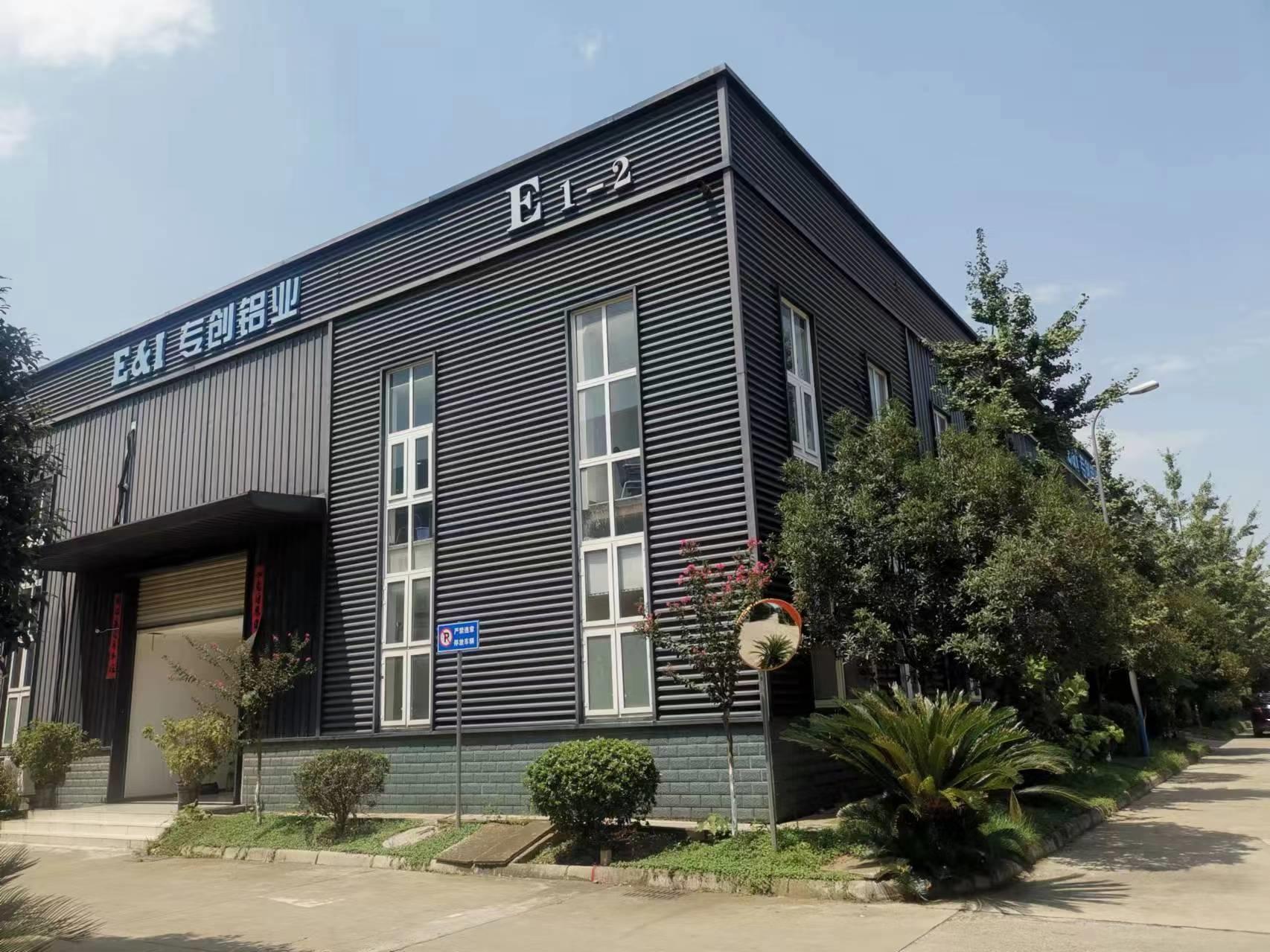
Chengdu E&I Aluminum Industry Co., Ltd. offers a completely integrated production ecosystem. Our facilities host state-of-the-art aluminum profile extrusion lines, automated anodizing plants, electro-spraying facilities, and high-precision CNC mechanical processing centers. Through this holistic architecture, we support custom structural frames, cleanroom enclosures, workbenches, mechanical safety fencing, photovoltaic solar supports, robotic assembly lines, and automated warehouse racking.
Every profile is produced to comply with national and international high-precision standards. Our final products are known for their exceptional finish quality, corrosion resistance, advanced anti-loosening and shock-absorbing connection designs, high structural capacity, and excellent mechanical versatility.
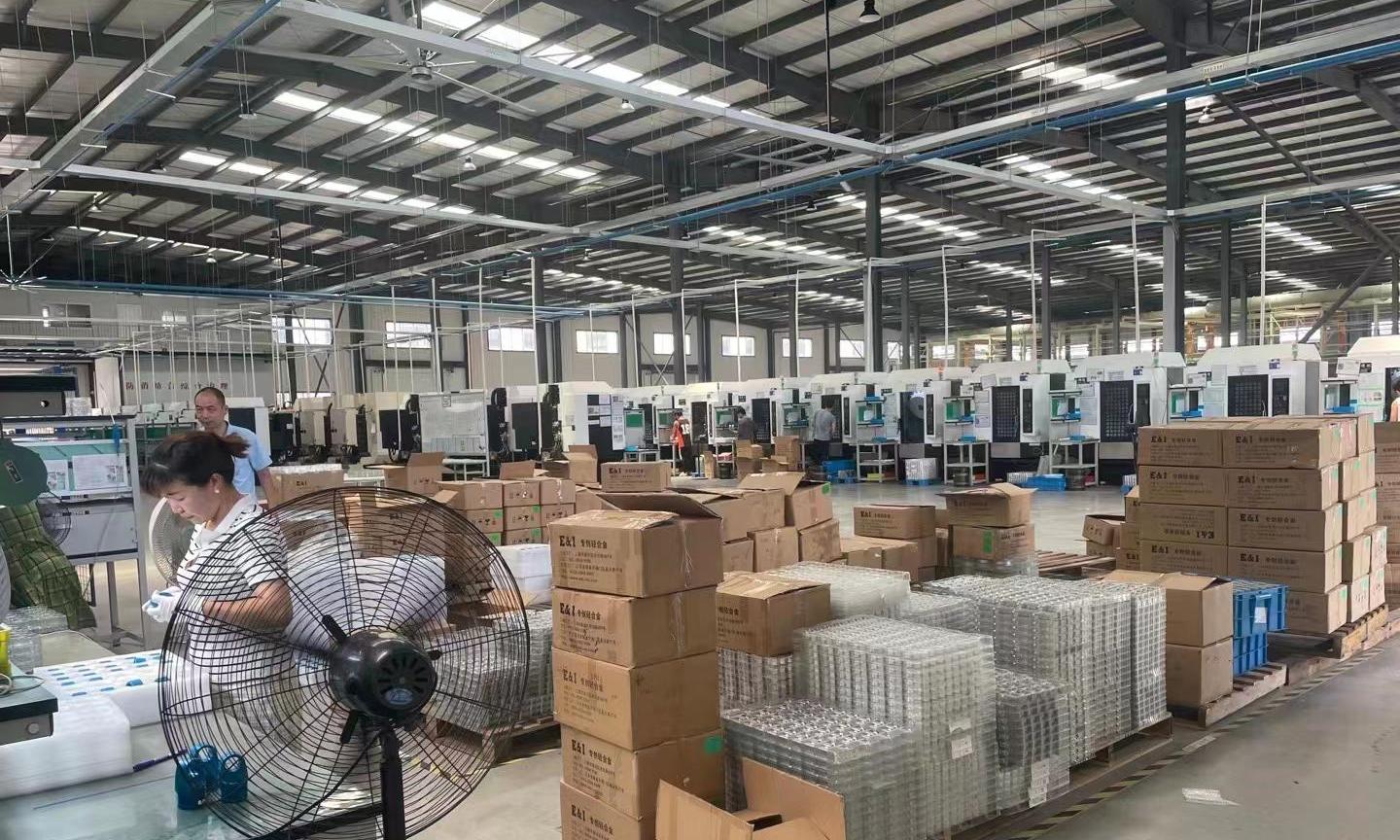
How E&I operates at the intersection of metallurgical excellence and customer-focused value creation.
We value our workforce as our primary asset, investing in continuous safety, career growth pathways, and competitive compensation architectures that foster alignment with our clients' long-term projects.
Delivering high mechanical stability and precise dimensional control, our profiles maximize total lifetime savings and support seamless integration with international industrial systems.
Leveraging specialized R&D from the National Institute of Nonferrous Metals, we integrate metallurgical science and precise tooling design to remain ahead of standard industry alternatives.
We work to establish stable, long-term relationships with global customers, domestic distribution channels, and logistics networks to guarantee consistent quality and reliable delivery.
An engineering analysis of material composition, deflection behavior, and structural optimization for industrial design.
Industrial structural profiles rely on optimized aluminum alloys to achieve target strength-to-weight ratios. The standard structural choice is the 6000-series family, primarily 6063 and 6061 alloys. At E&I, we refine the chemical composition boundaries (Mg and Si weight percentages) to control the precipitation of magnesium silicide ($Mg_2Si$) phases during heat treatment (T5 and T6 tempers). This process maximizes tensile yield strength without compromising corrosion resistance or surface finish quality.
Our rectangular profiles are engineered with dedicated internal ribs that reduce mass while preserving moment of inertia values ($I_x$ and $I_y$). As a result, systems like the ENI-8-40160 profile deliver load-bearing performance comparable to light steel, while significantly reducing structural weight.
For industrial designers building modular linear motion paths or heavy machinery frames, calculating structural deflection is critical. Under a standard point load, deflection ($\delta$) is calculated using the following formula:
Where F is the applied force, L is the span length, E is the Young's Modulus of Aluminum (typically 70,000 MPa), and I is the moment of inertia. Using structural profiles with high moment of inertia values, such as the E&I-8-100100 (profile 100x100), prevents mechanical deflection and helps ensure long-term precision for linear actuators and robotic assemblies.
| Profile Designation | Dimensions (mm) | Slot Width (mm) | Moment of Inertia Ix (cm&sup4;) | Moment of Inertia Iy (cm&sup4;) | Typical Applications |
|---|---|---|---|---|---|
| ENI-8-2040A | 20 x 40 | 8 mm | 9.03 | 2.45 | Lightweight safety frames, window/door assemblies |
| ENI-8-4040B | 40 x 40 | 8 mm | 14.20 | 14.20 | Climbing ladders, structural supports |
| ENI-8-4080T | 40 x 80 | 8 mm | 82.40 | 22.10 | Modular frames, workstation supports |
| ENI-8-40160 | 40 x 160 | 8 mm | 485.60 | 34.10 | Heavy-duty automation gantry, material handling |
| E&I-8-100100 | 100 x 100 | 8 mm | 324.50 | 324.50 | Heavy structural machine stands, robotic bases |
Global procurement teams prioritize quality consistency, logistical reliability, and structural versatility. Key procurement benchmarks include:
Meeting the evolving demands of automated manufacturing and sustainable industrial design.
The global market for structural aluminum extrusions is shifting toward smart, modular, and low-carbon solutions. Key trends shaping this industry include:
Industrial brands are increasingly evaluating the embedded carbon footprint of their raw materials. E&I is working to lower primary smelting energy usage and increase the use of clean-energy aluminum and recycled post-industrial scrap to minimize environmental impact.
Modern machine frames are evolving into interactive structures. Our profiles feature standardized routing channels for sensor cables, pneumatic supply lines, and electrical wiring, keeping internal components protected and maintaining a clean exterior.
From cleanroom-certified anodized surfaces to ESD (electrostatic discharge) protective coatings, E&I provides specialized finishes designed for sensitive semiconductor processing and electronics assembly environments.
Answers to common structural engineering, assembly, and custom profile questions.
6063-T5 provides excellent surface finish characteristics and complex extrusion details, making it ideal for standard frames, modular enclosures, and retail structures. 6061-T6 has higher tensile and yield strength, making it the preferred choice for high-load platforms, heavy-duty machinery bases, and structural applications that undergo welding or heavy machining.
Our automated anodizing processes produce uniform oxide layers, typically between 12μm and 18μm. Every batch undergoes salt spray testing, chemical resistance verification, and optical thickness measurements to ensure the profiles can withstand demanding cleanroom and industrial environments.
Yes. Our in-house engineering team designs custom dies and tooling. Combined with our high-precision CNC machining centers, we supply cut-to-length profiles with customized hole patterns, tapped connections, and milled details, delivering a ready-to-assemble kit for your team.
Our profiles are manufactured to comply with national and international precision standards, including EN 12020-2 and GB/T 5237. These standards define strict limits for twist, straightness, wall thickness variations, and T-slot geometry, ensuring trouble-free assembly with standard fasteners.
Explore our heavy-duty profiles, specialized single-sealed extrusions, and lightweight modular geometries designed for flexible assembly.
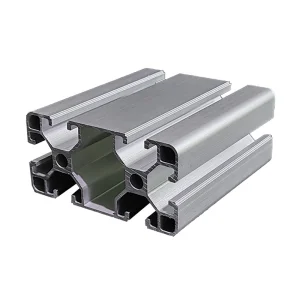
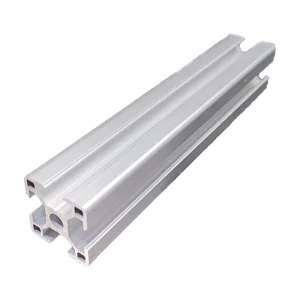
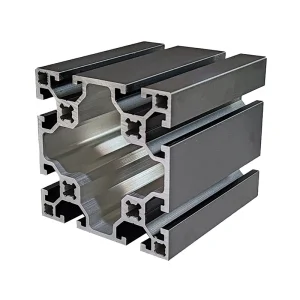
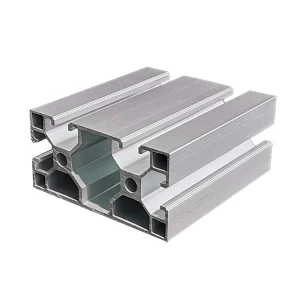
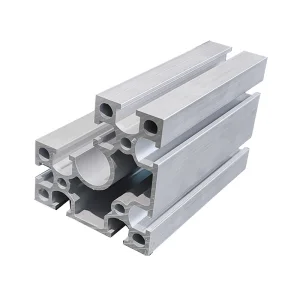
We supply high-precision, structural aluminum profiles that reduce assembly time, eliminate the need for welding, and offer excellent corrosion resistance. Through our engineering partnership with the National Institute of Nonferrous Metals, we provide complete technical support, from CAD drawing reviews to custom extrusion dies and precision CNC machining, delivering ready-to-assemble solutions tailored to your project requirements.
To help us deliver the most accurate quote and design support, please provide your structural layout files, required mechanical load parameters, and 2D/3D CAD files (STEP, IGES, or DWG format). Specifying your preferred alloy type (6063 or 6061), slot configuration, surface finish (anodized, powder-coated, or ESD-safe), and estimated order volume will help us speed up our production analysis.