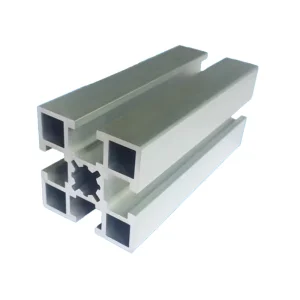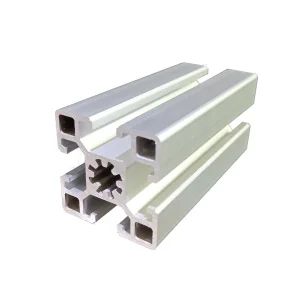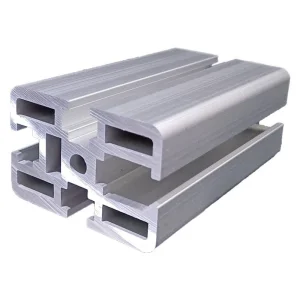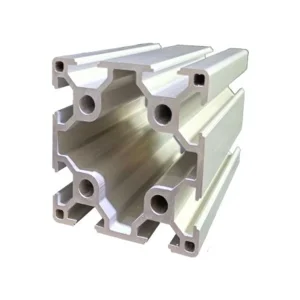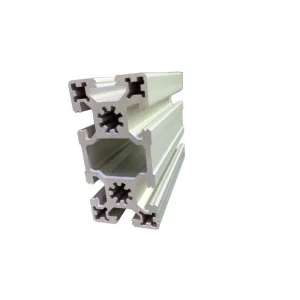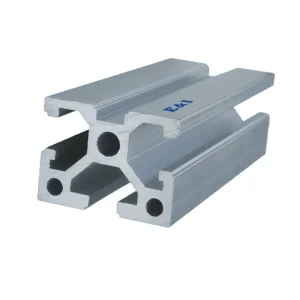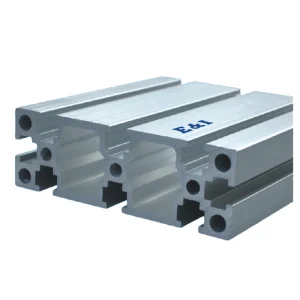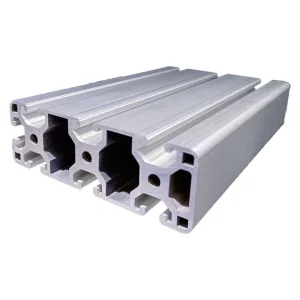
Explore our elite array of structural extrusions, customizable anodized units, workbenches, and assembly components designed for dynamic applications.
An authoritative analysis on engineering standards, structural capabilities, and material applications in the smart industrial era.
In modern industrial design, structural frames must be agile, lightweight, durable, and highly precise. Standard aluminum profile systems, characterized by modular cross-sections and strategic slotting, have revolutionized automated factories, robotics, cleanrooms, and renewable energy installations. Selecting the right aluminum profile is not just about choosing dimensions; it is a critical engineering decision that affects deflection thresholds, load capacity, and lifecycle durability.
Standard aluminum extrusions utilize high-strength alloys, typically from the Al-Mg-Si family (6000 series), with 6063-T5 and 6061-T6 representing the global benchmark. 6063-T5 offers excellent extrudability, allowing complex slot shapes, and provides a smooth finish ideal for anodizing. For heavy-duty structures where raw load-bearing capacity is vital, 6061-T6 provides superior yield strength and tensile resilience.
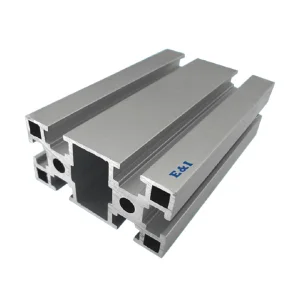
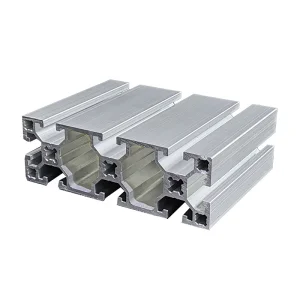
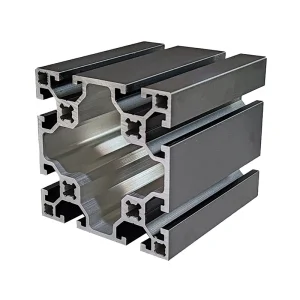
A key indicator of performance is the Moment of Inertia (Ix, Iy). A profile's cross-sectional geometry dictates its resistance to bending. For instance, the ENI-8-40120Y profile utilizes a wide cross-sectional distribution to maximize load resistance along its major axis, reducing the necessity of support gussets over long spans. Selecting the ideal slot width (typically 6mm, 8mm, or 10mm) and matching it with suitable fasteners ensures connection integrity, eliminating looseness under continuous mechanical vibration.
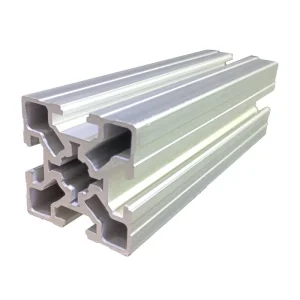
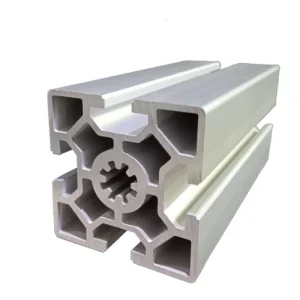
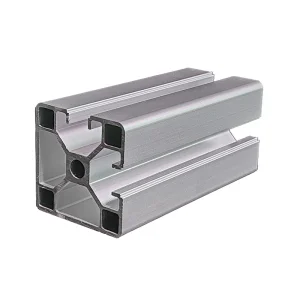
T-slot configurations support multi-angle connections without welding, enabling rapid assembly, on-site modifications, and low-cost structural revisions.
Our profiles feature clear or black anodization that exceeds 15 microns. This provides corrosion resistance, electrical insulation, and a clean appearance.
Specially engineered grooves and anti-loosening structural fasteners maintain tight connections even under heavy cyclic loading conditions.
Guided by our core values of "people-oriented, quality value, technological innovation, and win-win cooperation," Chengdu E&I Aluminum Industry Co., Ltd. focuses on manufacturing high-difficulty, high-precision, and highly demanding aluminum alloy products. We provide design, extrusion, anodizing, powder coating, and complete mechanical structural assembly in a unified, end-to-end service.
We work in collaboration with The National Institute of Nonferrous Metals, drawing on a team of light alloy researchers in China. This partnership enables us to offer complete solutions for aluminum alloy profiles, castings, and forgings, ensuring structural reliability for demanding industrial applications.
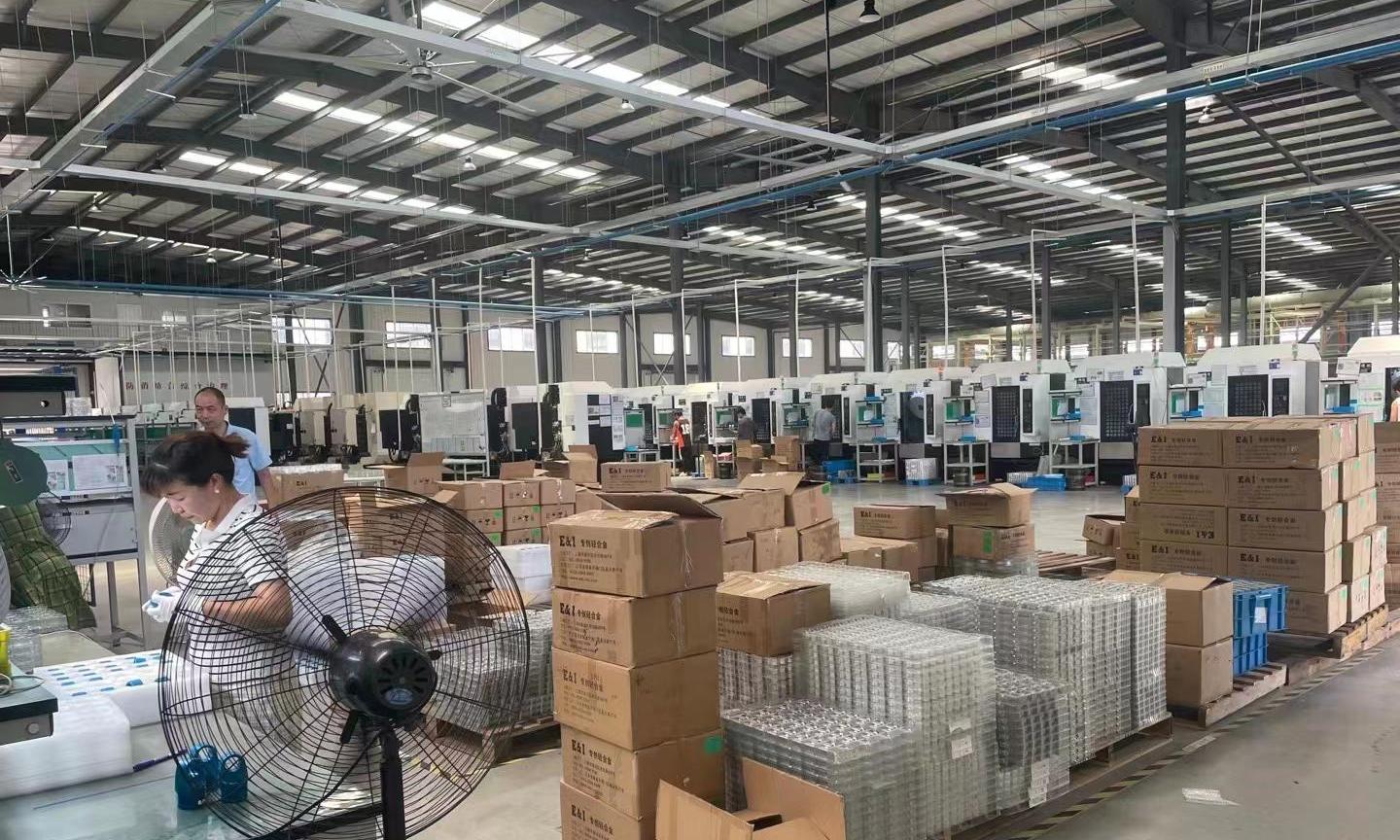
Our facility operates specialized aluminum profile extrusion lines alongside automatic anodizing and powder-coating systems. We manufacture structural frames, automated assembly lines, workbenches, machine guarding, solar mounting systems, logistics racks, clean sheds, and custom enclosures.
Our industrial profiles comply with national high-precision manufacturing standards. They feature smooth surfaces, corrosion resistance, and durable mechanical joints that resist loosening, making Chengdu E&I a trusted partner for Fortune 500 companies in the automotive, aerospace, and automation sectors.
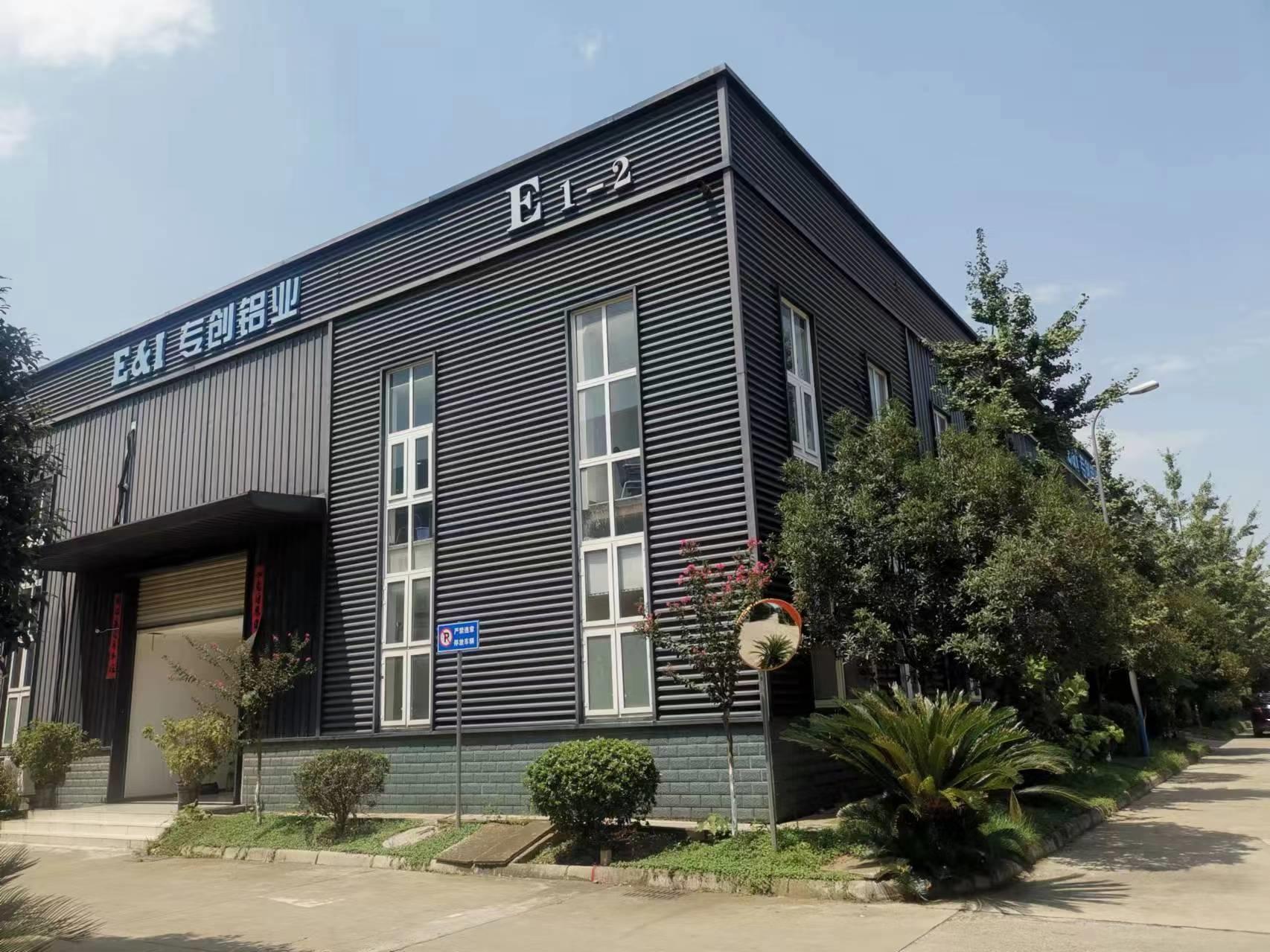
How our geographic and technological positioning delivers value, efficiency, and engineering precision to global partners.
Chengdu is a key aerospace and high-tech manufacturing hub in China. Chengdu E&I leverages this local engineering talent and partners with materials science institutes to maintain strict quality standards.
From smelting and die development to extrusion, surface finishing, and CNC machining, our regional vertical integration helps reduce production lead times and costs.
Located along the Chengdu-Europe express rail corridor, we offer reliable overland shipping routes to Central and Western Europe, complementing traditional maritime transit.
Global Corporate Clients
Regional Innovation Ranking
High-Precision Quality Testing
Standard Anodizing Thickness
Exploring the practical application of our structural aluminum systems in modern manufacturing environments.
Modern assembly lines require rigid structures that can be quickly reconfigured. T-slot aluminum profiles serve as the structural framework for Cartesian robots, linear guide rails, and transport conveyors. Their light weight reduces load requirements on actuators, while standard slot layouts simplify the integration of proximity sensors, pneumatic lines, and cable carriers.
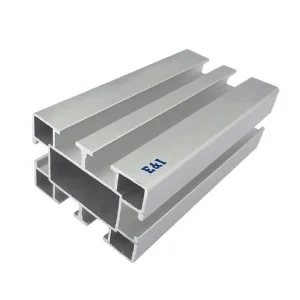
Our heavy-duty profiles, such as the E&I-8-8080 and E&I-10-4590W, provide the structural rigidity needed to support industrial robots and high-speed sorting mechanisms without bending under dynamic loads.
In aerospace manufacturing, assembly fixtures must remain dimensionally stable under changing temperatures. Working alongside non-ferrous metal research teams, Chengdu E&I manufactures aerospace-grade profile structures with low thermal expansion and high structural stability. These are used in maintenance scaffolding, mobile access steps, and storage racks for sensitive turbine components.
Solar arrays and tracking systems require structural supports that can withstand long-term outdoor exposure. Our profiles undergo custom anodization processes, creating a resilient oxide layer (up to 25μm) that resists UV degradation and atmospheric corrosion. These profiles feature built-in fastener channels that reduce installation times for utility-scale solar projects and rooftop mounts.
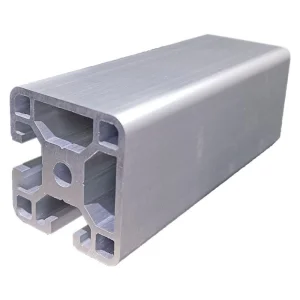
For semiconductor and pharmaceutical cleanrooms, structural materials must not shed particles. Chengdu E&I profiles feature fully sealed cross-sections and smooth exterior surfaces that do not catch dust. Integrated workbenches, such as the ENI-8-4040X, combine profiles with sheet metal components to create ergonomic, ESD-safe workstations suitable for electronics assembly and laboratory testing.
Key structural developments in the global aluminum extrusion sector.
Environmental standards require manufacturers to lower the carbon footprint of their products. Industry carbon footprint tracking now monitors emissions from smelting to final extrusion. Chengdu E&I is working to increase the share of recycled aluminum and utilize clean-energy smelting to supply low-carbon profiles for sustainable building and manufacturing initiatives.
Structural frame design is moving toward digital twin simulation. Engineers use CAD plugins to design structures, simulate static and dynamic loads, and check deflection limits before cutting metal. Chengdu E&I supports this shift by providing 3D CAD files for all standard profiles, helping engineers design and simulate assemblies before ordering materials.
Industrial applications now require finishes that offer more than basic corrosion protection. Modern facilities demand specialized coatings, including anti-static (ESD) powder coatings, antimicrobial surfaces for medical environments, and high-emissivity anodized layers for improved heat dissipation in high-temperature settings.
Key quality metrics and verification protocols for international industrial purchasing teams.
Global procurement managers must balance cost efficiency with strict technical performance. To ensure consistent quality and ease of assembly in international operations, procurement teams should prioritize the following standards:
Answers to common technical queries on aluminum profile selection, design limits, and manufacturing options.
Advanced structural designs, heavy-duty shapes, and frame components optimized for industrial automation and storage systems.