
Top 10 Aluminium Tube Manufacturers for Global Buyers

Time:2026-09-09 Author:Madeline
0%

Global buyers are rechecking their aluminium supply chains. Demand is expanding across construction, automotive, heat exchange, furniture, and industrial equipment. The Aluminium Tube market reflects this shift, but supplier quality remains uneven across regions.

The U.S. Geological Survey’s Mineral Commodity Summaries 2024 reported global primary aluminium production at approximately 70 million metric tons in 2023. That figure shows the scale of available metal, not the quality of finished tubing. Production capacity does not automatically guarantee reliable tubes. The International Aluminium Institute also continues to highlight energy efficiency, recycling, and emissions reduction as major industry priorities. These issues now influence purchasing decisions, especially for buyers serving regulated markets.

This guide examines ten Aluminium Tube manufacturers with global relevance. The selection considers extrusion capability, alloy range, wall-thickness control, surface finish, certifications, export experience, and production consistency. A strong supplier should provide traceable test certificates, clear tolerances, packaging suitable for sea freight, and responsive technical support. Small details matter. A crushed bundle can delay an entire project.

Market rankings are rarely absolute. Some manufacturers excel in precision tubing, while others compete through volume or lower conversion costs. This list should therefore support due diligence, not replace it. Buyers should verify current capacity, minimum order quantities, lead times, and compliance documents directly with each manufacturer. Even published company information can become outdated. That is an uncomfortable limitation, but an important one.

The following manufacturers are assessed from a practical, procurement-focused perspective. Their inclusion reflects documented market presence and manufacturing capability, while final purchasing decisions should depend on application testing and supplier audits.
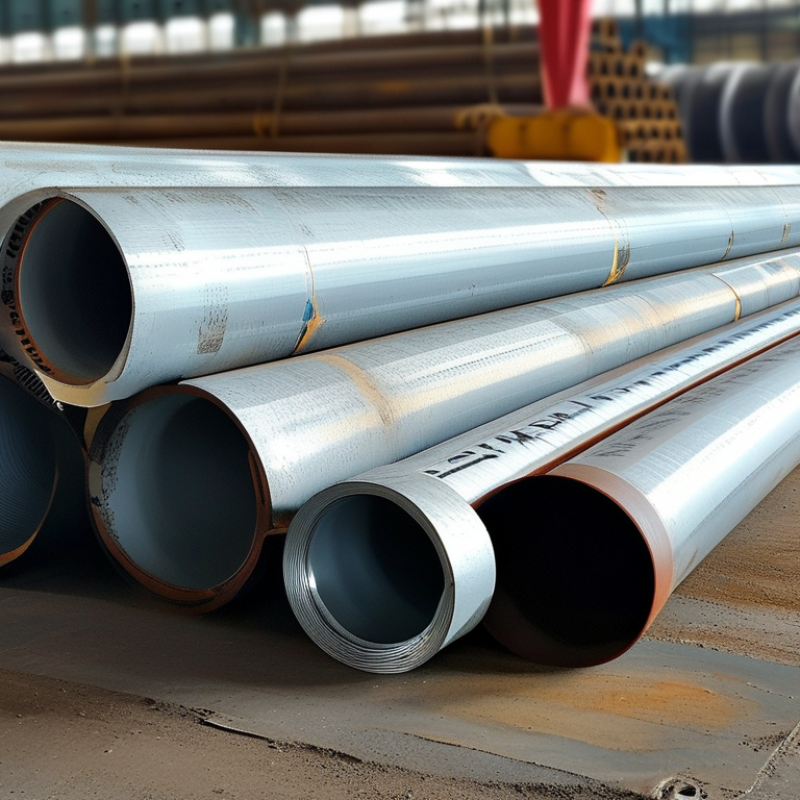
Top 10 Aluminium Tube Manufacturers for Global Buyers

Aluminium Tube Manufacturing: Types, Standards, and Global Applications

Top 10 Aluminium Tube Manufacturers for Global Buyers

Aluminium tube manufacturing begins with alloy selection, billet heating, and controlled extrusion. Common products include seamless, welded, drawn, and precision micro-tubes. Each type serves different tolerances and pressure requirements. The USGS Mineral Commodity Summaries 2024 estimated global aluminium smelter output at nearly 70 million metric tons in 2023. This large supply base supports construction, transport, HVAC, heat exchangers, and renewable-energy equipment. However, abundant metal does not guarantee consistent tube quality.

Standards define more than a product label. ASTM B210 covers seamless aluminium-alloy tubes, while ASTM B221 addresses extruded products. European buyers often reference EN 755 for extrusion dimensions and mechanical properties. Alloy 6063 suits architectural and general fabrication work. Alloy 6061 offers higher structural strength.

Temper, outside diameter, wall thickness, straightness, and surface condition should appear clearly on the purchase specification. Check them physically.

A practical inspection reviews mill certificates, eddy-current testing, tensile results, and dimensional records. For fluid service, pressure testing and internal cleanliness also matter. A certificate alone is not proof. Sampling plans can miss short defects, especially near tube ends. The International Aluminium Institute continues to report aluminium’s major role in lower-carbon transport, but recycling claims need careful verification. Scrap content, energy source, and traceability can vary sharply between mills. Global buyers should compare test methods, not only prices. This step is often neglected.

How to Evaluate Aluminium Tube Manufacturers for International Purchasing

How to Evaluate Aluminium Tube Manufacturers for International Purchasing

Choosing an aluminium tube manufacturer requires more than comparing unit prices.

Start with alloy, temper, diameter, wall thickness, and end-use requirements. The USGS Mineral Commodity Summaries 2025 reported global primary aluminium production near 72 million metric tons in 2024. This huge output does not guarantee consistent tube quality. Request chemical composition reports, dimensional inspection records, and sample tubes before approving mass production.

Check whether the supplier controls extrusion, drawing, cutting, and surface treatment.

Ask for tensile, hardness, eddy-current, and corrosion test results when suitable. ISO 9001 certification helps, but it is not proof of perfect production. An EN 10204 3.1 inspection certificate can improve traceability.

Still, paperwork can be polished. Inspect actual samples under bright light. Look for uneven walls, scratches, burrs, and oval ends.

International purchasing also depends on practical execution.

Confirm monthly capacity, tooling ownership, minimum order quantities, lead times, and packaging for ocean transport. Each bundle should resist moisture, impact, and movement inside the container. Ask how rejected lots are handled and whether batch numbers remain visible after delivery.

The International Aluminium Institute reports that nearly 75% of all aluminium ever produced remains in use, making recycled-content claims worth checking carefully. Request the recycled percentage, material source, and supporting records. I would also compare two production batches, not one. That extra check costs time, but inconsistent samples can become expensive after customs clearance.

Top 10 Aluminium Tube Manufacturers and Their Core Capabilities

Top 10 Aluminium Tube Manufacturers and Their Core Capabilities

The top ten aluminium tube manufacturers serve different engineering priorities, not identical markets. The International Aluminium Institute reported about 70.6 million tonnes of global primary aluminium production in 2023. That scale supports broad alloy availability, but tube quality still depends on process control. Leading producers typically combine extrusion, drawing, welding, heat treatment, and precision cutting. Some also manufacture seamless tubes for hydraulic systems, while others focus on welded tubes for construction and furniture.

Capability matters more than catalogue size. Strong suppliers control wall thickness, ovality, surface finish, and tensile strength through in-house testing. They may offer 6061, 6063, 6082, or application-specific alloys. Advanced facilities use ultrasonic inspection, eddy-current testing, spectrometers, and automated dimensional measurement. Anodizing and powder coating can improve corrosion resistance, especially around coastal projects. Recycled-content programs are also expanding. The International Aluminium Institute links aluminium recycling with major energy savings compared with primary production, although actual results depend on electricity sources and scrap quality.

Sustainability claims need evidence. The Aluminium Stewardship Initiative’s standards emphasize traceability, responsible sourcing, and environmental management. Buyers should request mill certificates, inspection plans, tolerance data, and recent audit records. Delivery capability matters too: stable die tooling, packaging for long tubes, and export documentation prevent costly delays. No supplier is perfect. A ranking can mislead when a factory excels at architectural profiles but lacks experience with pressure-rated tubing. The best choice matches tested capability to the tube’s real service conditions.

Top 10 Aluminium Tube Manufacturers for Global Buyers - Top 10 Aluminium Tube Manufacturers and Their Core Capabilities

A practical comparison of representative global aluminium tube manufacturing capability profiles, covering alloy selection, production processes, dimensional ranges, finishing options, quality standards, and typical end-use sectors.

Profile Primary Production Strength Common Aluminium Alloys Typical Tube Forms Typical Size Capability Surface Finishing Applicable Standards Typical Global Applications
Capability Profile 01 Extrusion
High-volume seamless and porthole-extruded tube production
6060, 6061, 6063, 6082 Round tube
Structural tube
Multi-hole profiles
Outside diameter: approximately 6–250 mm
Wall thickness: approximately 0.8–15 mm
Anodizing
Powder coating
Mill finish
Brushing
EN 573-3
EN 755
ASTM B221
Construction systems, machinery frames, furniture, transport equipment
Capability Profile 02 Precision Drawing
Cold-drawn tubing for tight tolerances and smooth internal surfaces
6061-T6, 6063-T6, 2024, 7075 Seamless precision tube
Drawn tube
Thin-wall tube
Outside diameter: approximately 3–120 mm
Wall thickness: approximately 0.3–8 mm
Bright finish
Polishing
Clear anodizing
Protective film
ASTM B210
ASTM B241
AMS dimensional practices where specified
Instrumentation, aerospace components, hydraulic systems, medical equipment
Capability Profile 03 Welded Tube
High-frequency welded tube with controlled seam quality
3003, 5052, 5083, 6061 Round tube
Rectangular tube
Square tube
Coil tubing
Outside diameter: approximately 8–300 mm
Wall thickness: approximately 0.5–10 mm
Mill finish
Brushed finish
Anodized finish
Powder coating
ASTM B547
ASTM B483
EN 10204 inspection documentation
Heat exchangers, trailers, irrigation, general fabrication, automotive parts
Capability Profile 04 Heat-Exchanger Tube
Tube manufacturing focused on thermal transfer and corrosion resistance
1050, 3003, 3102, 6061 Plain tube
Microchannel tube
Internal-grooved tube
Outside diameter: approximately 5–80 mm
Wall thickness: approximately 0.25–5 mm
Cleaned and degreased
Cladding-compatible surface
Conversion coating
ASTM B210
ASTM B241
EN 573-3
HVAC equipment, refrigeration units, radiators, condensers, evaporators
Capability Profile 05 Automotive Tubing
Lightweight formed tubes with bending, flaring, and joining support
3003, 6061, 6063, 6082 Fuel-line tube
Air-conditioning tube
Chassis tube
Custom bent tube
Outside diameter: approximately 6–100 mm
Wall thickness: approximately 0.6–6 mm
Mill finish
Electrostatic coating
Anodizing
Laser-marked surface
ISO 9001 quality systems
ASTM B483
Customer-specific automotive specifications
Automotive thermal systems, commercial vehicles, buses, mobility equipment
Capability Profile 06 Aerospace-Grade Tube
Traceable production with strict mechanical and dimensional control
2024, 6061, 6063, 7075 Seamless tube
Precision drawn tube
Hydraulic tube
Outside diameter: approximately 5–150 mm
Wall thickness: approximately 0.5–12 mm
Bright dip
Hard anodizing
Alclad-compatible finish
Non-destructive-test-ready surface
ASTM B210
ASTM B241
AMS material specifications when contractually required
Aircraft structures, defense equipment, fluid systems, high-performance engineering
Capability Profile 07 Large Structural Tube
Large-section extrusion and fabrication for load-bearing assemblies
6061, 6063, 6082, 6005A Large round tube
Square and rectangular tube
Custom hollow sections
Outside dimension: approximately 50–500 mm
Wall thickness: approximately 2–30 mm
Anodizing
Powder coating
PVDF coating
Machined finish
EN 755-9
EN 12020
ASTM B221
Solar mounting, rail systems, bridges, industrial platforms, architectural structures
Capability Profile 08 Custom Fabrication
Cutting, CNC machining, bending, drilling, welding, and assembly
6061, 6063, 6082, 5052 Cut-to-length tube
Notched tube
Bent tube
Machined tube assemblies
Common project range: 10–250 mm outside diameter
Cut lengths from short parts to long assemblies
Anodizing
Powder coating
Polishing
Deburring and edge finishing
ISO 9001 quality systems
EN 10204 inspection reports
Customer drawings and tolerances
Industrial automation, robotics, enclosures, retail systems, custom machinery
Capability Profile 09 Marine & Corrosion-Resistant Tube
Tube production for humid, saline, and outdoor environments
5052, 5083, 5086, 6061 Marine-grade round tube
Handrail tube
Fabricated structural tube
Outside diameter: approximately 10–200 mm
Wall thickness: approximately 1–15 mm
Anodizing
Marine powder coating
Brushed finish
Chromate-free pretreatment options
ASTM B210
ASTM B241
EN 573-3 corrosion-resistant alloy designation
Marine equipment, offshore structures, transport bodies, outdoor infrastructure
Capability Profile 10 Sustainable High-Volume Supply
Recycled-content production, automated inspection, and export logistics
6060, 6063, 6005A, 6061 Standard extrusion tube
Decorative tube
Industrial tube
Packaged cut lengths
Outside diameter: approximately 8–300 mm
Wall thickness: approximately 0.8–20 mm
Mill finish
Anodizing
Powder coating
Wood-grain or decorative transfer finish
EN 755
EN 12020
ASTM B221
ISO 9001 quality systems
Solar frames, building products, consumer goods, logistics equipment, general engineering
Buyer note: Dimensions, alloy tempers, tolerances, certificates, minimum order quantities, recycled content, and surface treatments should be confirmed against the supplier’s current technical datasheet and purchase specification before ordering.

Comparing Product Quality, Certifications, Capacity, and Export Services

Top 10 Aluminium Tube Manufacturers for Global Buyers

Global buyers should compare more than price. The USGS Mineral Commodity Summaries 2024 estimated global aluminium production at about 70 million metric tons in 2023. This scale creates choices, but also uneven quality. Strong manufacturers show stable wall thickness, clean welds, controlled temper, and repeatable dimensions. Ask for inspection reports, material certificates, and batch traceability. ISO 9001 supports quality control, while ISO 14001 and ISO 45001 indicate broader management practices. Automotive buyers may also require IATF 16949. Certification helps, but it is not proof of daily performance.

Capacity needs practical measurement. Check extrusion press sizes, annual output, tooling resources, and backup production lines. A large factory may still miss a small order’s tolerance. Export service matters too. Reliable suppliers provide clear Incoterms, export packing, customs documents, and realistic lead times. The World Bank Commodity Markets Outlook shows that aluminium prices remain sensitive to energy costs and industrial demand. Therefore, fixed quotations need validity periods. Otherwise, the cheapest offer may become expensive later. No ranking is perfect; product fit should guide the final decision.

Tips: Request three recent samples from different batches. Measure diameter, wall thickness, surface finish, and length yourself. Confirm whether the quoted capacity covers your exact alloy and temper. Ask for a container-loading photo. Small details often expose weak process control. I would also review complaint records, even when the supplier hesitates. That uncomfortable step is often more useful than polished marketing material.

Practical Steps for Selecting the Right Aluminium Tube Supplier

Top 10 Aluminium Tube Manufacturers for Global Buyers

Selecting an aluminium tube supplier requires more than comparing prices. USGS Mineral Commodity Summaries 2024 recorded about 70 million metric tons of primary aluminium production in 2023. That scale creates choices, but also quality risks. Start with a precise drawing. State the alloy, temper, outside diameter, wall thickness, length, and acceptable tolerances. Ask for samples from regular production, not specially prepared pieces. Measure them with calibrated tools. Small variations can affect sealing, bending, and assembly.

Review the supplier’s inspection plan and material certificates. These should identify chemical composition, mechanical properties, heat numbers, and testing standards. Request records for surface finish and dimensional control. ISO 9001 certification helps, but it does not replace production evidence. A factory audit should examine extrusion presses, cutting lines, packaging, and nonconforming-product procedures. Check monthly capacity and realistic lead times. The cheapest quotation may fail during peak demand.

Sustainability also deserves verification. The International Aluminium Institute estimates aluminium production contributes roughly 2% of global greenhouse-gas emissions. Ask about recycled content, energy sources, and emissions data. Require evidence, not vague claims. Confirm export experience, packaging details, payment terms, and delivery responsibilities in writing. One overlooked point is communication: a supplier that answers technical questions slowly may create costly delays later. I have seen specifications remain unclear because buyers trusted a catalogue. That mistake is avoidable. A short trial order reveals more than polished sales language.

FAQS

: What should buyers specify before requesting aluminium tube quotations?

: Provide the alloy, temper, outside diameter, wall thickness, length, and acceptable tolerances. A precise drawing prevents costly misunderstandings.

Which aluminium tube alloys are commonly available?

Common options include 6061, 6063, and 6082 alloys. The best choice depends on strength, bending, corrosion exposure, and the intended application.

How can buyers verify tube quality?

Request material certificates, heat numbers, chemical composition, and mechanical test results. Use calibrated tools to check samples. Small errors matter.

Should buyers request samples before placing large orders?

Yes, request samples from regular production rather than specially prepared pieces. Measure diameter, wall thickness, length, surface finish, and ovality before approval.

What inspection equipment might a capable supplier use?

Useful equipment includes spectrometers, ultrasonic inspection, eddy-current testing, and automated dimensional measurement. However, equipment lists do not prove consistent production quality.

How do seamless and welded tubes differ?

Seamless tubes suit some hydraulic or pressure-related applications. Welded tubes often serve construction, furniture, and general fabrication needs. Confirm pressure requirements carefully.

What surface treatments may improve aluminium tube performance?

Anodizing and powder coating can improve corrosion resistance and appearance. They may help in coastal environments, but treatment quality still requires inspection.

How should buyers evaluate sustainability claims?

Ask for recycled-content records, energy information, emissions data, and traceability documents. Vague environmental language is not enough. Evidence can still be incomplete.

What delivery details deserve attention?

Confirm monthly capacity, realistic lead times, packaging for long tubes, export documents, payment terms, and delivery responsibilities. A low quotation may fail during peak demand.

What is the most reliable way to select a supplier?

Match tested capability to the tube’s real service conditions. Review the factory, run a short trial order, and assess technical communication. A catalogue can mislead.

Conclusion

This guide provides a practical overview of the Aluminium Tube industry, covering common product types, manufacturing methods, international standards, and applications in construction, transportation, engineering, energy, and industrial equipment. It explains how global buyers can assess manufacturers by reviewing material quality, dimensional accuracy, surface treatment, production technology, testing procedures, certifications, and compliance with destination-market requirements.

The article also compares the core capabilities of leading manufacturers without focusing on specific brand names, including production capacity, customization options, quality control systems, packaging, lead times, and export support. To select the right Aluminium Tube supplier, buyers should clearly define technical specifications, verify factory experience, request samples and documentation, evaluate communication and logistics capabilities, and compare total purchasing value rather than price alone. A structured selection process can help ensure stable supply, consistent performance, and reliable long-term cooperation.

Madeline

Madeline

Madeline is a dedicated marketing professional with a wealth of expertise in our company's core offerings. With a keen understanding of the industry, she brings a unique perspective to her role, consistently delivering high-quality content that highlights the superior aspects of our products. As......